Category Archives: City Theme Activities

Learning about Shorinji Kempo

Shorinji Kempo Greeting


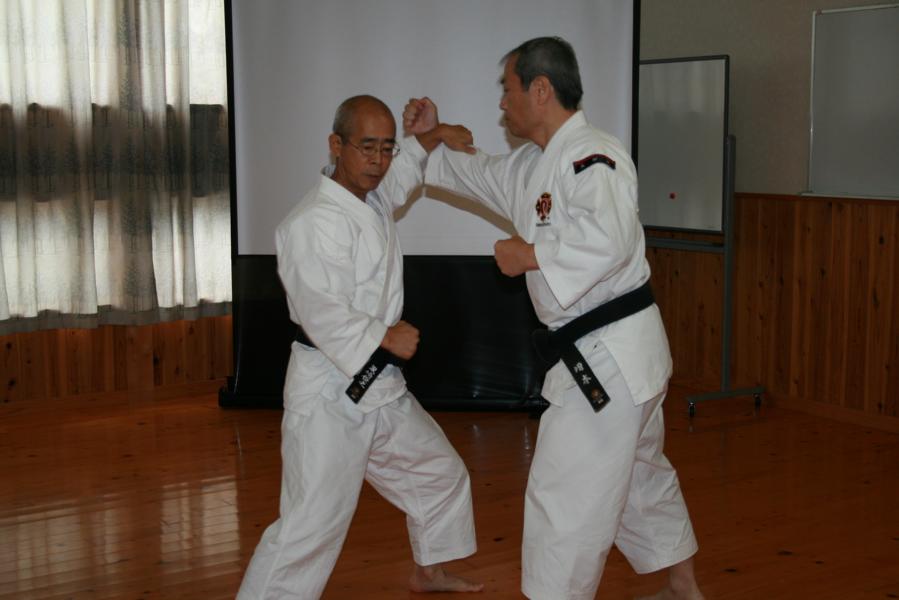
Shorinji Kempo Demonstration

It was such a cool experience visiting Shorinji Kempo! All that we did made my day; Lecture on a great martial arts style, chicken curry lunch (I ate 4 bowls of rice with it!), learning the routines and real techniques of grabbing & kicking, practicing them with my fellow WCI members, and finally just hanging out with the Sensei and disciples who were mostly lovely Japanese kids! I got to know and learn another great martial arts style apart from Kung Fu, Karate, and Judo. Moreover, I gained a sense of Japanese manner and culture from Shorinji.

With “Goho, Juho, and Seiho”, Shorinji Kempo maintains characteristics of various martial arts styles such as Tai Chi, Karate, and Aikido, and it requires the uniform of physical fitness and Zen, which is high state of mind. Since I practice Chinese martial arts and Shorinji Kempo is named after the famous Chinese martial arts school Shaolin Temple, I was able to quickly understand the philosophy behind the fighting skills, which combines the idea of developing personal strengths both physically and mentally and great courage to protect people and a strong sense of justice.

From the way of greetings or the chinkon practice, on the other hand, we saw Japanese manner and discipline. Manner plays such an important role in Japanese society, so greetings are so important in this way. Show respect to rivals before practicing, perform routine of Chinkon Gyo all together, and keep in mind that happiness is half for oneself and half for others. Shorinji Kempo totally shows the features of Japanese culture.

Apart from the martial art itself, meeting the Shorinji masters and students per se is such a fun and worthwhile experience. Take me as an example that I felt so gracious to meet two 8 year-old students, and we quickly made good friends to each other. Without a language in common, we had a poke war to start with, and then we turned to rivals for Kempo practice. They taught me several moves and asked me in Japanese some questions about China, so I lifted him up over my shoulder in return, which seemed to be a lot of fun for him and tried to answer their questions with my shabby Japanese. As the mother of the student later told me, he likes China very much and had learned a lot of stuff about that. This sheer international friendship was already more than enough to make my day!

(Kun Zhang, China)
A Day in Japanese Elementary School!

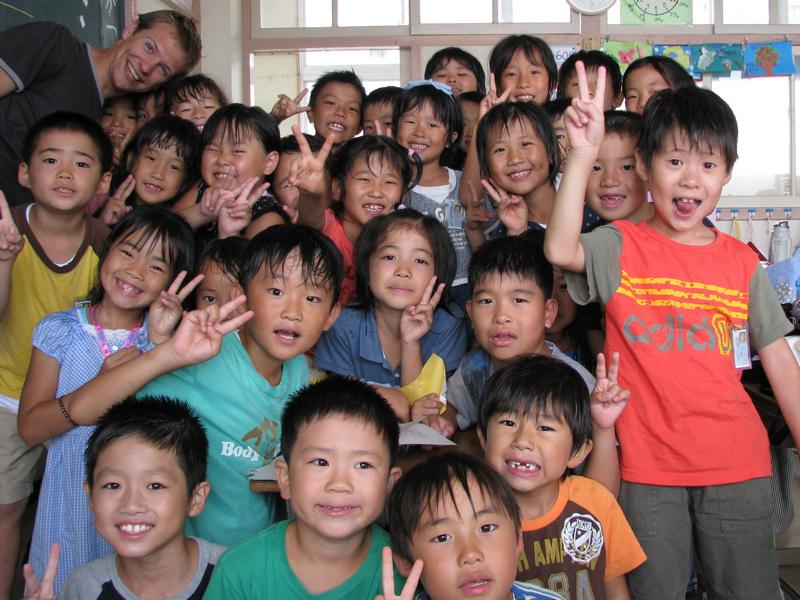
David at Japanese Elementary School

World Campus – Japan visited Takematsu Elementary School of Omura, where I took part in a second grade class of thirty 7-year-old kids. As I don’t speak Japanese, reading class was quiet impossible for me. However, during math class I had a chance to prove my math skills. After having lunch and cleaning the classroom, we got ready for swimming. We had great fun doing different exercises in the swimming pool and most of the time I felt like the main attraction on a playground of 120 kids. Sadly, soon it was time to say good-bye. I received different beautiful presents and even a cute love letter 🙂

Visiting a Japanese elementary school was a great opportunity for me to get insight into the Japanese education system and get in contact with foreign children, even if it was impossible to communicate with words. I’m sure the school kids had the same unique and exciting experience and they will remember this extraordinary school day for a long time!

(David Hollenstein, Austria)

Visit to Nagasaki Peace Museum

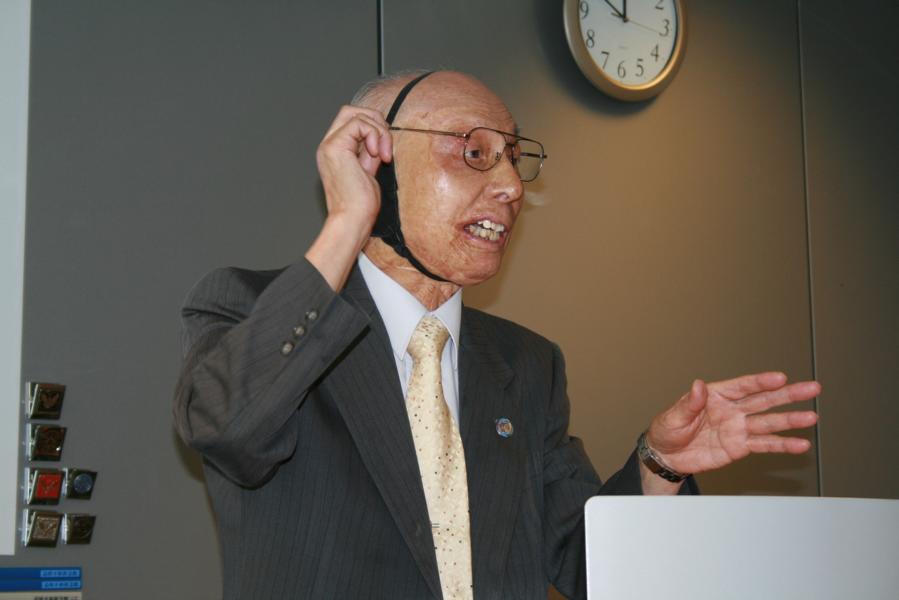
Nagasaki Bombing Survivor


Listening to Nagasaki Survivor

July 8th, 2009 was our first official group outing where we took the bus from Omura City to Nagasaki in order to visit the Nagasaki National Peace Memorial Hall for the Atomic Bomb Victims.

I can tell you honestly that this wasn’t like any museum I’d been to before, but I guess that’s to be expected given the subject matter. Looking at all the collected objects, the various interactive displays and real pictures depicting victims only days after the explosion was a harrowing experience to say the least. I can say I was deeply affected after reading and listening to the accounts the museum had on display of survivors.

Though graphic at times, I would say the museum is a must visit for people from any country, because of the message of peace through remembering it offers. After the visit, we walked up to Peace Park, where we sat and discussed how the message each of us had just received might be passed on when we go back home. Having received first hand knowledge from an actual survivor earlier in the day and then having seen all that was on display at the museum, the consensus was that it was important to make an effort to spreading the message of peace while incorporating different countries views on history.

(Matt Clyde, Canada)

Visiting the Mayor of Omura, Nagasaki

Meeting with Omura  Mayor

I am from New York and never have met or seen any of the mayors in my city. They are almost untouchable to me and I only get to see and hear about them on television.

Today I was lucky enough to be able to meet and talk to the mayor of Omura, Nagasaki. His name is Takashi Matsumoto. As the group and I waited in the lobby to see him I was quite nervous because I thought he would be a very serious person.

To my surprise he was really friendly. Mayor Matsumoto was very curious about each of our countries. He wanted to know what we were proud of when it came to our home towns. To answer his question I told him about the diversity of people that can be found in New York. There is an opportunity to experience and learn about every culture in New York.

The superintendant of the elementary schools was also participating in our discussion. He told us how in the elementary schools the food for lunch gets delivered to the schools and is prepared for the students at the school. Most of our countries have similar systems except for Austria. David, who is a student from Austria told us that the elementary children have a 2 hour lunch. During that time they go home and eat lunch there. Then they return to school when they are finished. The mayor liked this idea for lunch.

Mayor Matsumoto also told us some history about Nagasaki, like how it was the only city open to foreigners during Japan’s isolation period. The time with him ended when the mayor gave us his business card. I feel very honored that I got to meet the Mayor of Omura city.

(Hasiyna Gibson, USA)

Supporting Arao LOC at Charity Bazaar

Adriana at Arao Charity Bazaar
Arao City Mall WCI Charity Bazaar


Gaby with Arao LOC

Today, World Campus International staff members along with the purple-adorned Arao LOC (local organizing committee) participated in the Charity Bazaar at the Arao City Mall. As a group of gaijins (foreigners in Japanese), we attracted much attention to our booth! There were hand-crafted goodies galore, including scarves, tissue boxes, and flower arrangements, all of which were donated by the generous LOC. We also took this opportunity to promote and share about World Campus – Japan with the local community of Arao! Funds raised by the event will go towards helping host future participants.