Tag Archives: featured

On the topic, and toppings, of pizza feat. Kumamoto Prefectural University

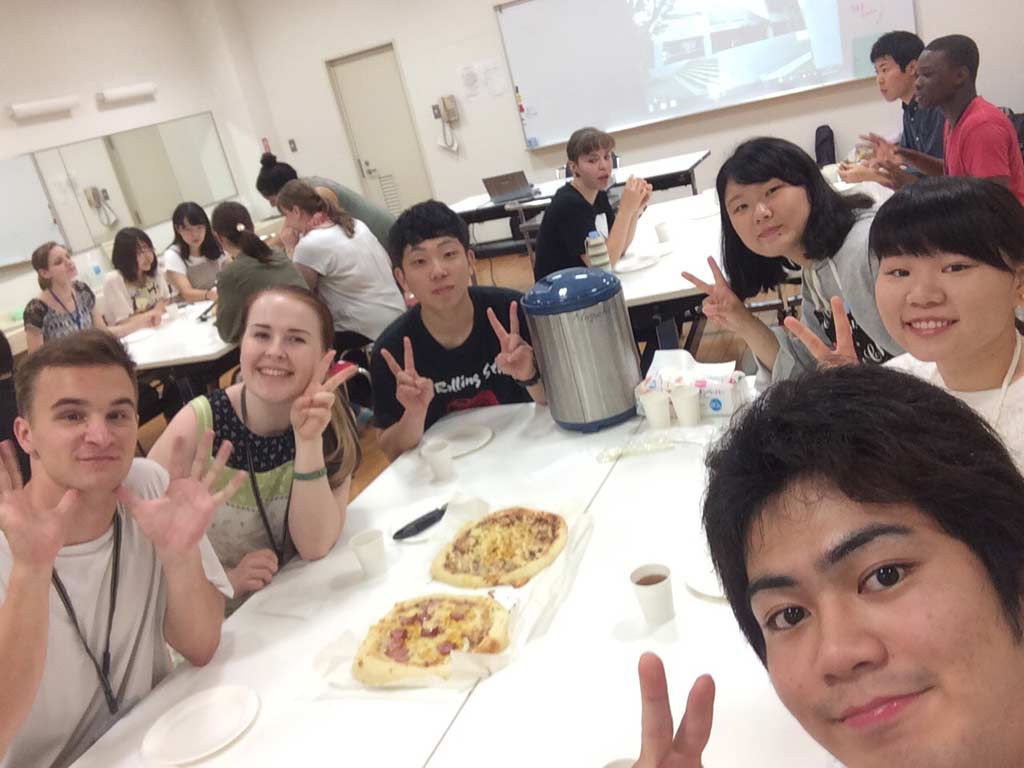
Eating pizza together with students of the Kumamoto Prefectural University

Pizza. Pizza can be a wonderful food. First invented in Naples, Italy at the dawn of the 19th century, pizza has been considered a traditionally western food since its inception. Eaten gratuitously in the United States, pizza has thrived as an American delicacy, evolving into many different styles with more toppings than there are stars in the sky(citation needed).

Given that description, giving pizza to an American in a foreign country is sort of like giving a Japanese person sushi or (even more heinous) giving a Dane a Danish; you don’t expect it to be anything new or exciting. However, against seemingly insurmountable odds, the afternoon I spent at University of Kumamoto shoving yeast and flour in a bottle and preparing the very food I knew the best felt more foreign to me than anything else.

Now, dear reader, as you may be thinking, “what is this impossibly handsome author talking about? He just said that pizza was the most American thing he could think of!” First off, thank you for the compliment, secondly it wasn’t just the pizza that made the day great silly, it was the people making it!

I don’t believe that there is anything that brings unfamiliar or even estranged people together more effectively than activities. That’s why even that skinny guy who wore eyeliner and tight pants in high school got up when an impromptu game of dodgeball was announced by the neighborhood kids, the fun of doing something with others is an addiction impossible to escape.

Within the blink of an eye, the Japanese of Kumamoto and the World Campus members of American and northern Europe were no longer from anywhere but planet Earth. We were singing and playing music and eating delicious food, bound together by nothing more than a mutual love for all of the above. So, when I look back on my day cooking pizza with my newfound friends of Kumamoto, it won’t be the pizza I’m remembering, but who I was eating it with.

Cam out.

Cameron Henry, USA

Lesson on ecology and pollution: Minamata disease

Minamata disease museum in minamata kumamoto

On Friday we visited Minamata Eco town and learned about the Minamata disease. Since Minamata is approximately 90 km from our home stay city, Kumamoto, it was a day full of travelling and beautiful countryside viewed from the bus windows. We also had a guest student in our group, as my host sister joined us for the visit.

Our first stop at the Minamata Eco Town was enlightening in many ways. In Japan, like in Finland, people are very careful about recycling, but even though I recycle myself, I have never given much thought to how the lifecycles of the recycled things continue. At Minamata we learned about recycling and saw how glass bottles are recycled and reused in Japan, and I have to say that there were many glass bottles! All the workers seemed very passionate about their job, which I have to give them credit for, especially since some of the job includes checking an endless line of reusable glass bottles for cracks. Later we could also buy different glass products made out of used glass bottles by the manager, Mr. Tanaka. We also learned that it takes about 20 wine bottles to make a square meter of asphalt, which is an ingenious way of reusing glass!

The second activity for the day was Minamata Disease Municipal Museum. Even after a small briefing we had already had about Minamata disease, there was still lots of new information at the museum. We also had the opportunity to listen to the story of a Minamata disease survivor, Mr. Nagamoto. He was born with the disease, and his story was very touching. Firsthand experience and the feelings he could describe made the whole thing feel much more real: after all, although the pollution of Minamata took place in the 60’s it was not until 2004 that the prefecture was sentenced responsible for the disease. Although Mr. Nagamoto has suffered from the disease his whole life and will continue to do so as long as he lives, he talked about the things matter-of-factly without bitterness and smiled often, which is, I think, something admirable. The disease itself and the suffering it caused for Minamata citizens, whether they were victims or not, was a rather difficult subject, but the beautiful view from the museums roof and the positive attitude of the survivor helped to lighten the mood a bit.

All in all, the day’s activities were very informative and interesting. Protecting nature and recycling seems now even more important to me than before. It is terrifying what we can do to the environment because of ignorance or indifference, and the extent of catastrophes such as Minamata is unbelievably large. I hope that the highly ecological ways of Minamata will spread so that we can prevent things like this from happening again.

Heidi Ropo, Finland

Kayaze Elementary School

Class in Kayaze day5  Omura
Class in Kayaze, Omura

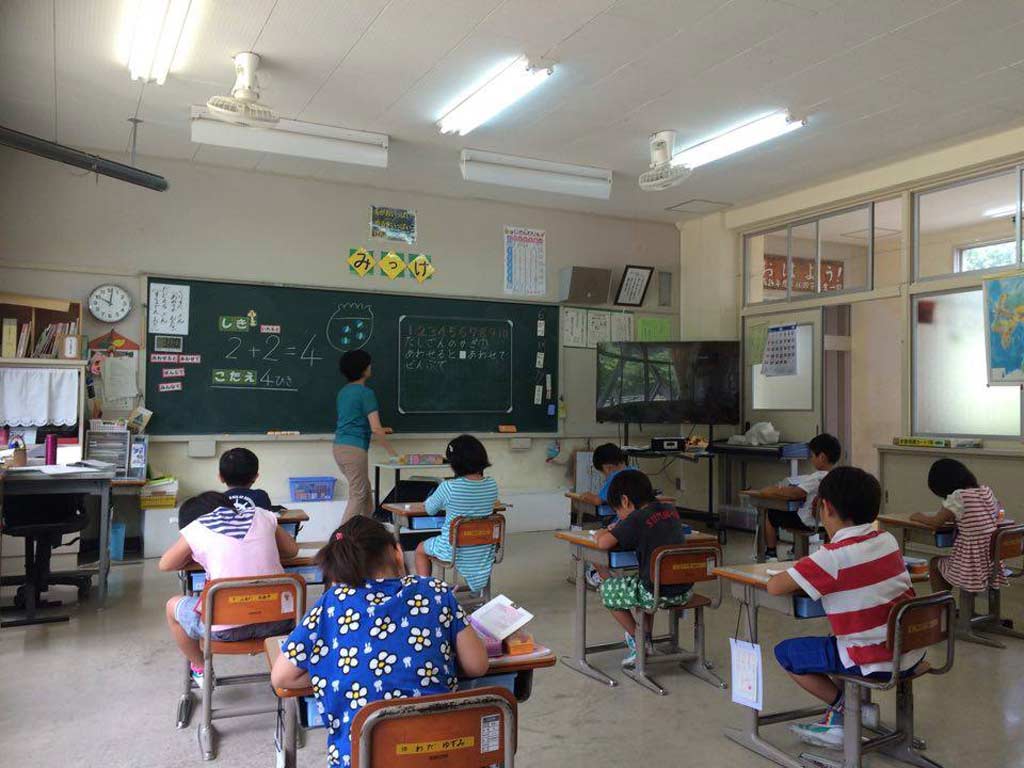
Ok, so today was fun, but so, so, tiring. The principal of Kayaze elementary school as well as the teachers were so nice to invite World Campus International Japan to experience a day in the life of a young Japanese student and I was lucky enough to together with Krysta and join the youngest of them all; the ichinensei, the first graders. After a demonstration of the daily agenda by the student in charge of the day, it was time for us to introduce ourselves and where we came from, and some eyes widened when they realized how far we had traveled.

When it comes to the lesson itself, math was on the menu at first and the teacher demonstrated some addition as well as the implementation of counters in the answer. I can honestly say that as a ichinensei myself, but as a university student, I felt at least at par with the kids. When the first break came I was glad that Mr. Nishimura had warned us beforehand, since suddenly we were surrounded by a rough dozen of half sized people who wanted to talk and play with us.

And so on did the rest of the day go, and I can honestly say that I have found a new respect for elementary school teachers whom with strength, kindness and patience, all out of this world qualities, guide the students through subjects. Their only proper break was during the lunch hours when the students themselves did their best to defeat the WCJ participants in the sun with games like dodge ball. And they certainly did.

I just want end with a big thank you to the principal, the teachers and the students for welcoming strangers to their school and sharing a piece of their lives. I am really glad to have experienced this and I will most likely treasure this experience for at least a dozen decades. Arigatou gozaimasu!

Daniel Solvold, Sweden

Shinto Shrine and Shorinji Kenpo

Zuvan throwing sensei day3 omura

Visiting Koutengu shrine was a great experience. Witnessing another culture’s religion is always great to see. The shrine’s garden area was great to see and going through the different procedures to enter the shrine was fun to do.

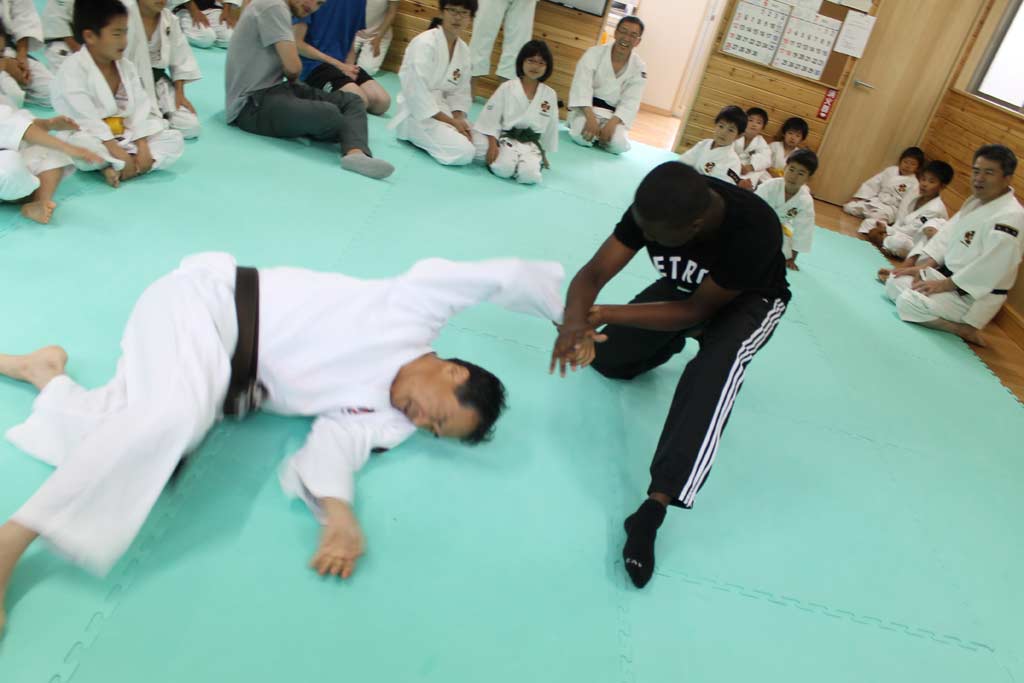
Shorinji Kenpo was also extremely fun. We learned the different pressure points to use to gain an advantage on an opponent point them into submission. I was even able to throw a few teachers around. All the students were much younger than us which made it even more fun when they taught us.

We had lunch at the dojo and were able to have conversations with each of them. All of them were kind and fun to interact with. I think that in the future I would love to maybe continue Shorinji Kenpo. I definitely wouldn’t mind trying another lesson or two. I hope we have a lot more fun with something like this again soon.

Zavon Sample, USA

Life lesson in Nagasaki Peace Museum

Hiro Nishimura and Mayor of Omura

Life lesson in Nagasaki Peace Museum

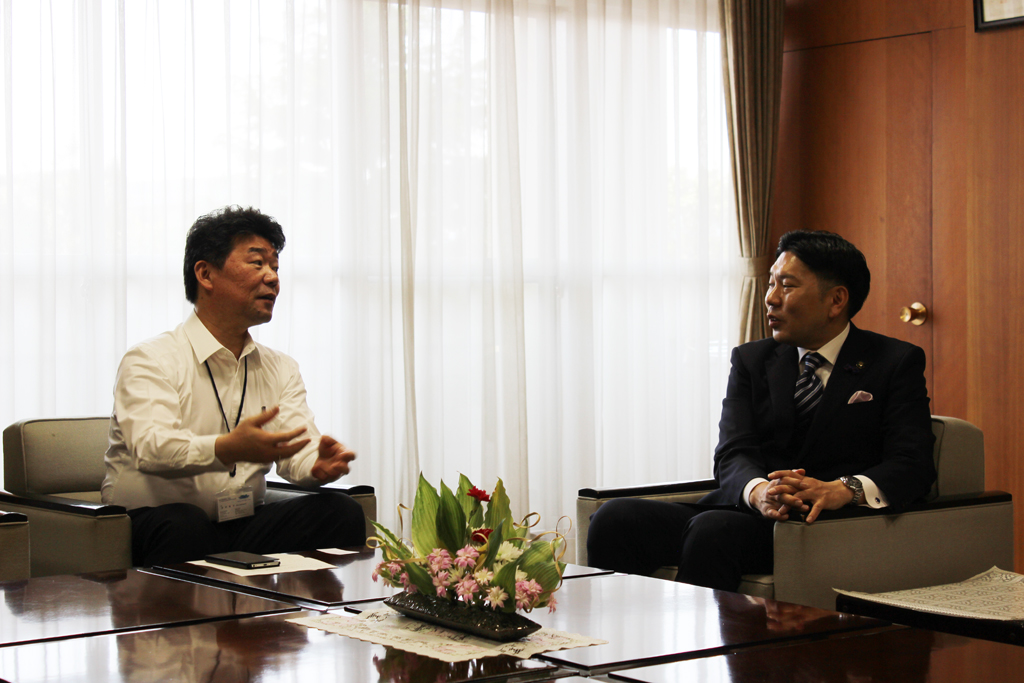
On Friday we met with the Mayor of Omura. He was a man in his mid thirties, really young – as everyone who lives here kept telling me – with a personable smile. Despite the heat he was dressed in a three piece suit, just a sign of what he’s willing to go through for his job. I was practically boiling in nothing more than a button down shirt. The Mayor, Mr. Sonoda, was surprisingly kind, especially for a leader of a city. He even brought a small gift for each of us. On any other day of this program the meeting would have been the highpoint without a doubt.

But on Friday, we also heard a speech from a survivor of the Nagasaki atomic bomb, and went to the Nagasaki peace museum. It’s the third time I’ve been to the museum, so I was a bit prepared, but even still it was hard for me to reconcile the cheerful atmosphere of the morning with an in depth explanation of the Nagasaki atomic bomb. It was like something from a different world.

Perhaps it’s just that I’m an American, but Mr. Kiyono’s, the atomic bomb survivor’s, speech was shocking. He told us how Nagasaki was reduced to rubble by the bomb, and ravaged by fires that lasted through the night, leaving only corpses in its wake. He also told us about his sister, who died of acute radiation poisoning. On her deathbed she wrote pages about how terrible America was in her diary. It’s just… hard to grasp.

If one thing, the museum only reinforced how terrible the bomb was. The exhibit called Nagasaki the “Atomic Wasteland ” with rooms full of debris, melted glass and twisted metal. I remember most clearly the walls of buildings that were scorched black by the heat of the explosion, save for where something else took the brunt of the blast. The silhouettes are still visible, and clearly retained the shape of a wooden ladder, a washing pole, a man. It was chilling.

Today I look around Nagasaki, and I see no hint of that “Atomic Wasteland”. The city is bustling, filled with beautiful buildings and kind people. There is no stigma associated with being American, despite what my country did to this city.

How, I wonder, is this the Nagasaki that was reduced to ash? Perhaps Fumi, Mr. Kiyono’s sister has the answer. Earlier I wrote that she filled her journal with anger, but leaving it at that would be doing Fumi a disservice. Later on, in the final pages she had the strength to pen, she left that hate behind. Instead, she wrote about her dreams for the future. How she hoped to recover, so she could marry a childhood sweetheart and raise a family.

Maybe, just like Fumi, the people here have decided to look towards the future, instead of staying mired in the past. Whatever the reason, I can only be thankful for people like Fumi, or Mr. Sonoda, or my host family, the Ogawas. People who are willing to forgive, instead of holding onto a grudge. Truly, the world is a better place for the people of Nagasaki.

If you come to Japan, I recommend a visit to Nagasaki, and the Peace Museum. Though I’ve been there before, I always feel like I learned something new, like, I have grown as a person. Oh, it’s sad, it’s sad. To quote a memetic American expression: “I cry every time.”

But even still, I’m happy that I went.

Joseph Marcia, (USA)