Category Archives: 地域学習

Review of the Arigato Event in Omura 2012

Tonight (few days before posting this article) was the long-awaited Arigato Event in Omura! What a success! Nearly everything went smoothly, and my expectations to have an incredible evening were well-exceeded. I think everyone has been saying “I want to do it all over again!” The good news is that we will, in our next city!

Arigato event


I may be speaking for more than myself by stating that Arigato Event practices were long and often grueling. Jet-lagged and cranky, the idea of learning a long dance the first day did not thrill me; the veteran participants, however, assured me that once I saw how much the event would mean to my host family, it will have been completely worth it. Even so, I was skeptical—until tonight. The event allowed me to bond deeply with my family and fellow World Campus Japan participants through dancing, singing, acting goofy, and laughing (lots of laughing!!). Sharing cultural information was fun as well. I think my fact about the United States was unknown by all—that 75% of the world’s eggplant supply is grown in the United States! (Did you know that?)

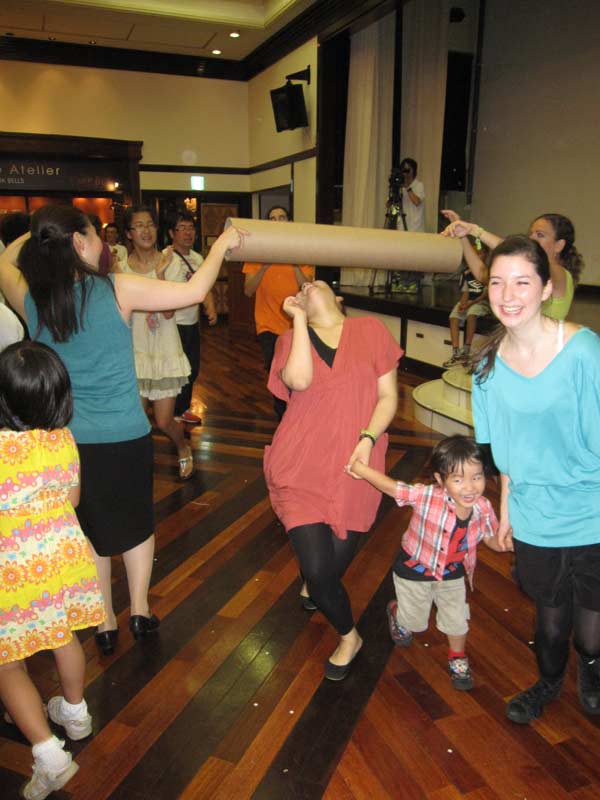
Perhaps the mentioned activities are what made the night so special. Or perhaps it was the beautiful “Park Bells” facility and the delicious catering. It could have been the fantastic brass band that entertained us after our portion of the show was over. Then again, it might have been our excitement in the “green room” as Celi led us through “hoorah!”’s—infusing good luck and an intimate energy into our close-knit group of participants. Come to think of it, I realize that that the night was so special because all of these things occurred. New faces, many hugs, emotional “toasts,” and of course dancing the limbo filled the night with gratitude and happiness.

Limbo after the Omura Arigato Event


I left the event holding the hands of my two host siblings as we danced to our car, singing some of the ridiculous Japanese songs we performed during the show. Everyone was in a great mood, and it was a perfect ending to an amazing stay in Omura.

Go World Campus Japan!!

(Alexander Polk – The United States)

Kamiuchi Elementary School

Date of activity: June 15th

Kamiuchi Elementary School


60 kids, a few teachers and lots of positive energy. That’s the formula for Kamiuchi Elementary School. A super awesome school we visited in the Omuta Area, Fukuoka Prefecture.

I had the chance to hang out with the kids from 3rd and 4th grade… They are just amazing. So open and willing to learn… I think it all comes from their “super sensei” as I called him, because he teaches both grades at the same time, in the same classroom without losing his smile and his passion for education.

The rest of the world has a lot to learn from small places like Kamiuchi where small is not bad is simply different, GOOD Different!

Cely at Kamiuchi Elementary School


(Celi Dolovitz – Education Manager Summer ’12 Road Team)

Nagasaki Atomic Bomb Memorial Museum

Today we were granted the wonderful opportunity to visit the Nagasaki Memorial Museum. It was a bit rainy at first, but luckily that counteracted the immense heat from the previous days.

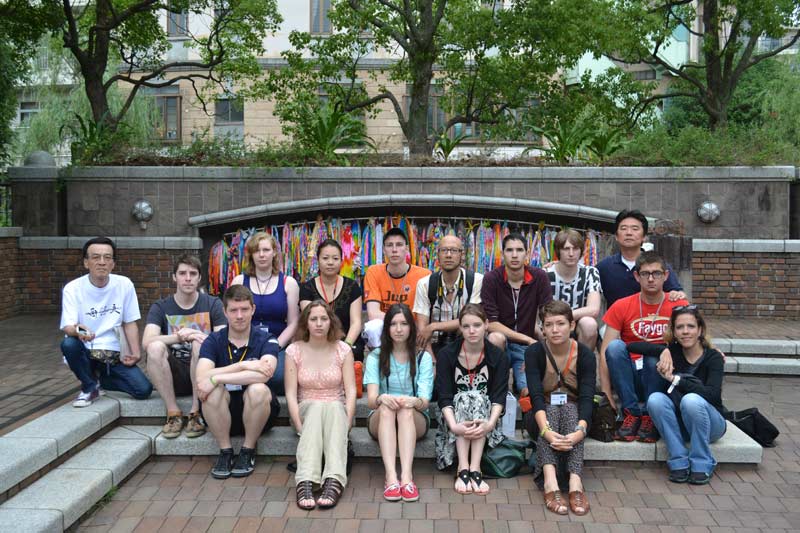
Everyone from WCI managed to fold at least 70 origami-cranes, I know I couldn’t have done so without the awesome help from my family. My host father folds really fast and even my 2 little sisters and my little brother helped folding the cranes, which made it a fun family activity.

Nagasaki Atomic Bomb Memorial Museum cranes


The Museum itself is an amazing building from the outside and the inside is impressive to say the least. Though I had learned about the dropping of the bombs in school many years ago, I felt like I knew nothing, walking past the various displays and exhibits. The immense horrors that the people of Nagasaki and Hiroshima had to go through were carefully displayed, along with some amazing stories of survivors and noteworthy people from that era.

Our guest speaker, Mr. Yamawaki-san, 78 years old, told us his story about when the bomb dropped 2 kilometers from his house in Nagasaki. His story was moving, touching and devastating. For instance the tale about his father who was working in a factory near the hypocenter of the bomb. I admire his perseverance and his will to honor his late father properly, together with his brothers (Yamawaki-san was 11 years old at the time).

Nagasaki Atomic Bomb Memorial Museum yamaguchi


I also admire his ability to carry on with his life and to be able to speak to so many people about the moments after the bomb dropped. Even more the fact that he is able to tell his tale to foreigners like us who essentially have no idea what the people had to go through.

(I myself only knew the facts, I had never really thought of the survivors and what they had and still have to go through. Like Yamawaki-san who now still shows signs of radiation poisoning)

After we had visited the museum and shared our feelings and visions with the WCI group, we visited the Nagasaki Peace Park (Heiwa Kouen), where I was immediately impressed by the giant statue pointing up and yonder. Unfortunately it was still raining and after we took a group photo we went back on the bus to hit the art museum in Nagasaki.

Yamawaki-san left a giant impression on me, being able to pick up his life and share his story with anyone willing to pay attention. The following question asked by a WCI-participant impressed me a lot and made us all think about our role in all of this:

“What can we do as younger generation to avoid facing these horrible events in the future?”

Yamawaki-san replied:

“Share your knowledge, what you have learned today and what you find important in life, share this knowledge with everyone to make sure everyone understands what happened and to make sure that this will never happen again.”

Robin de Rijke – The Netherlands

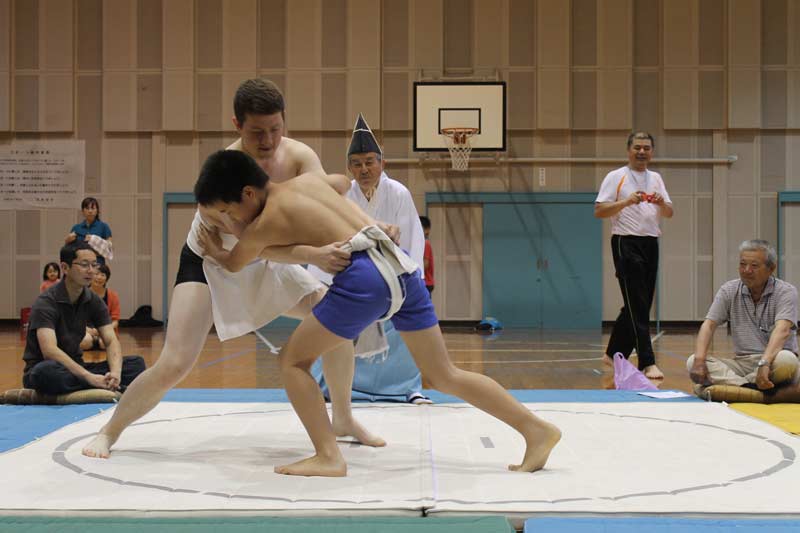
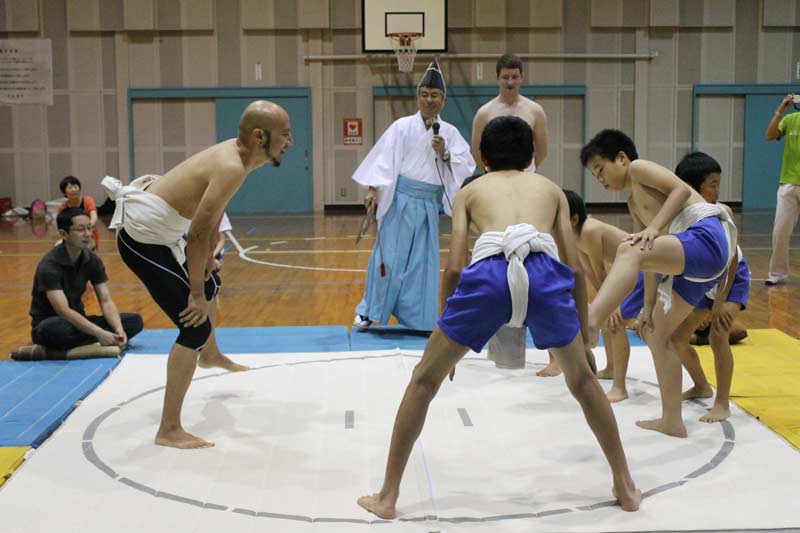
Shorinji Kempo

I had no idea about what to expect about this day and I love it. Expectations aren’t cool…they sometimes don’t let life surprise you!

We started the day reviewing some Japanese lyrics and sign language, and after that, we moved into another room to hear some history and also watch a video about it.

Shorinji Kempo definitely isn’t your average martial art.

For starters, you take your partner as an equal, and you salute your Sensei as an equal. Looking at the other person right in the eye, there’s no traditional Japanese bowing here.

Also, the philosophy of it is very interesting. They talk a lot about balance, specially when it comes to Power and Love. They say, if you have Power only, your actions may become dark. And if you only have Love, you might become weak in your relationship with others.

I think this is quite true, because you definitely need to work on your strength to be able to actually do things that help others.

Shorinji Kempo works on every aspect of the human, from body to spirit. It’s not only some class kids take in the afternoons. It can become a way of life, or at least, that was the creator’s intention.

shorinji kenpo zen


The practical aspect of learning Shorinji Kempo was fun. Only, for me, a little rough. I guess learning moves being the ‘attacker’ against one of the adult Senseis can’t really end painlessly.

That’s what I call physical Japanese cultural learning. That’s culture you can feel in your left arm.

shorinji kenpo physical experience


But, yeah, maybe I am exaggerating.

It was awesome to see the little kids doing Shorinji Kempo, and also watching a father-son choreographed fight. In the end, we had an interesting question and answer session.

I appreciate so much these people that let us walk in into their daily activities and actually be part of them, not only be there as spectators. Little by little you start understanding and loving even more this culture we came here to meet.

Paulina Meza, México

The ‘Decopon Face’

My host dad, who is an elementary schoolteacher, taught me the name of a Japanese citric the second day I arrived to the country. We have been gradually converting that word into a growing inside joke. I’ll tell you why.

The word is ‘decopon’, and that first time I pronounced it nasally exaggerating the last syllable a lot…That night, my host parents and me laughed about it and repeated the word quite a few times. More loudly each time.

The next day, my host dad told me (in his nice but broken English) he had told his class about me and about my ‘decopon’ pronunciation. His whole third-grade class found it hilarious…So did I. Embarrassing but in a really funny way.

The Decopon Face decopon


Then, at night when we went to buy dinner groceries, I could tell he was telling the salesman about the story, because of the way he was talking and looking at me and also because he ended the story with a loud ‘DECOPOOOON’. He then wanted me to say it. I just laughed and got red, but didn’t repeat the word.

Today was our Host Family Day and we went to a river, then to downtown Nagasaki. We had an incredible time! We had lunch at a restaurant, hung out at an awesome four-floor stationery store, went to a Shinto shrine, and also went to the ‘Spectacles Bridge’ and took a lot of pictures.

To finish our Nagasaki day, we went to the Historical Museum, and looked at the exhibition.

The last part of the exhibition was about Elephants, sponsored by a local chain of grocery stores that features an Elephant in its logo.

You can definitely appreciate that Elephants were an important animal in Japanese society before, and you can enjoy the changes in art in the different sculptures and paintings, featuring, of course, elephants.

There were a few paintings and miniature sculptures that had really funny faces and expressions painted on them. I pointed at one, and said: ‘Decopon face!’

We started laughing very loudly inside the entirely quiet room, and had to cover our mouths and look to different ways to be able to stop.

Good thing we were almost finished with the exhibition because the rest of it, practically all we could see, were decopon faces…

It is so amazing how no matter how different our mother tongues are, and how different our backgrounds are, we somehow have a very similar sense of humor, similar feelings and ways to connect…

We have been having such a perfect time, sharing random things and laughing about random situations…I have even learned about Japanese onomatopoeia with them!

I am super grateful for all we have shared in these few days, no matter how much guessing there has been in between! I am lucky to be in this family this week.

I will definitely say goodbye to them with an enormous hug, a happy heart, and my funniest decopon face.

Paulina Meza, México