Category Archives: 地域学習

WCJ – YMCA student day 2012

Date of activity: June 30th

Today we split op in 4 groups and went to various places in kumamoto city accompanied by kumamoto university students. The 4 groups visited: the art museum, an old shopping district and university, the Kumamoto castle and an old town. The following are stories and impressions of the activities given by participants from different countries:

My group went to visit the Kumamoto art museum! It was super interesting because I bad never seen ancient native Japanese art before. The museum was surrounded by beautiful cherry trees, near Minamoto castle. After that we visited a shrine. The place had a kind of magical energy and you can feel the Japanese culture there… we had a lot of fun with the university studies who came with us!

Today I got to visit the famous castle of the city and prefecture of Kumamoto. I went there with 3 other WCI members as well as 5 members of the YMCA, who are Japanese students currently studying at Kumamoto University. They want to get in touch with foreign students by participating in an exchange program or by visiting another country short-term. We went to the castle on a very humid and rainy day. When we arrived at the castle we were completely soaked by rain and sweat. But when we were actually within the castle walls the rain stopped and our awesome tour began. We first visited the oldest part of the castle after which we went to the greater complex, the official hall where the officials would gather in the old days.

Kumamoto Castle


The interior is amazing and functions nowadays as a museum. The main tower is rather sober in it’s interior and shows the military of the castle. After we visited some other parts of the castle we wrapped up and went back to the YMCA building.

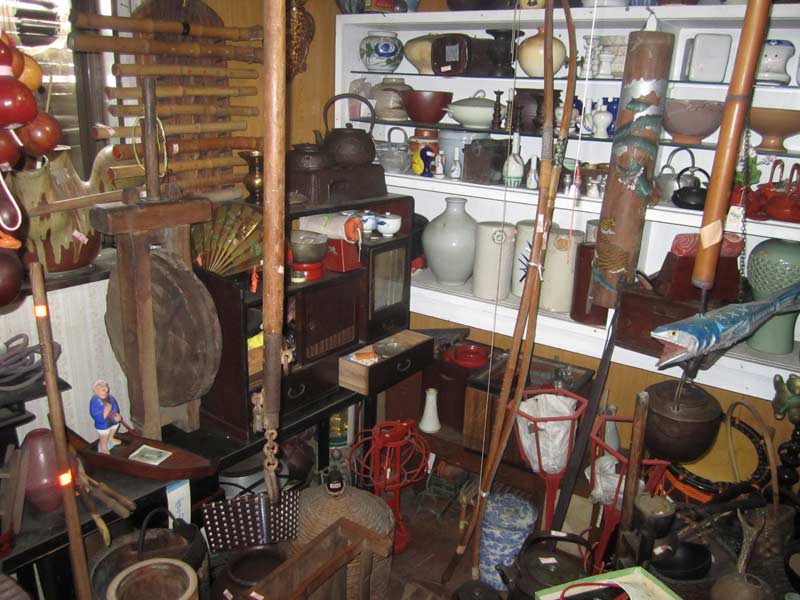
Today we went sightseeing in Kumamoto city with YMCA students. If they hadn’t been with us we would have gotten lost for sure. Among things we discovered was an antique Japanese secondhand store, which was rather cool!
YMCA student day


They had a wide range of items, from kimono’s, fans and umbrellas to dolls, pottery and wooden rafts, in short a lot of Japanese antiques! In general, we had a lot of fun just being together with the students, although it was rainy and we all ended up getting soaking wet.

This day our group went to an old town in Kumamoto city. Joining us were 3 Kumamoto university students, all majoring law. On the way to the old town we had a nice talk with them about various subjects about Japan and our own cultures. When we arrived at the old town we fled into a Scandinavian themed cafe and drank a variety of delicious drinks. Because there were European maps all over the table we talked about traveling a lot and talked about the various places that each of us visited. We learned a lot about our travel experiences and some of us found out new places in the world they want to go to someday. We walked around the old town for a bit when the rain started again. Luckily the leader of our group knew a place nearby that we could visit for a bit. The place was a ryokan, a typical Japanese hotel. What was special about this place was the basement. The basement was a special room for making t-shirts with some kind of wax-system. We were all really impressed in how beautiful the designs were. After having been shown this we all went back to the YMCA building while chatting some more with the Kumamoto university students.

Paulina, Anlong, Joakim, Jurriën – Mexico, Netherlands, Norway

The Arao Arigato Evento of 2012

Date of activity: June 28th

So the big day has finally come, the arigato event day, the last day where we are together with our host families. We are training hard all day and revise the parts we feel insecure about, like the song in Japanese sign language. In between breaks people are revising their Japanese speeches. Step by step we get more confident. We already performed a shortened arigato event in the school, but perfecting this is our goal. I, myself am amazed at how beautiful the Chinese dance looks that Ying performed on stage. Ellery asks the Dutch people to sing a happy birthday in Dutch for his little host sister with him, because it´s her birthday today. A very touching and nice idea. My host family and their niece were there as we entered the room holding flags, opening the event with a great flag-dance.

The Arao Arigato Evento


Everything goes well, people enjoy themselves on stage and the audience has a blast. Every chair is taken and LOC people keep bringing in more chairs so that everyone has a place to sit. I don´t remember such a huge audience in my last 20 arigato events. I feel relieved when the arigato event is finally over. I am still no fan of singing and dancing on stage but the people always looks so happy and some even get very emotional. This makes me feel like it was worth learning dances and lyrics, even though I don’t like it that much.

Daniel Gallion – Luxembourg

Katana and Mayor day

Date of Activity: June 26th

Today we first had arigatou event practice. It requires a lot of effort, but is definitely worth it. After an awesome bentou lunch box the mayor of Arao city came to visit us and we had a great Question and Answer session. We learned a lot about the city and it’s mayor.

After the interaction with the mayor we went to a katana smith. That was a great experience. We saw a bit of the process of making a katana, which takes about two weeks. Some of us got the chance to personally experience how difficult it is to deform hot iron. I for example can tell firsthand that it is really difficult.

deform hot iron


We also got a demonstration of how to use a katana during our visit. And we also were lucky enough to get the opportunity to slash some bamboo mats ourselves after learning how to wield the Japanese Katanas. These bamboo mats are said to be as though as a humans stomach. It is really hard to hit the bamboo at a proper speed and angel, but when done correctly it cuts through as if cutting through air.

After the host family pickup i went to the nursery home where my host brother and sister were. After dinner this great day with a lot of new experiences slowly approached it’s end, getting closer to another day full of new exciting experiences.

Ellery Oosterberg – The Netherlands

The Last Activity day in Omuta

Date of Activity: June 19th

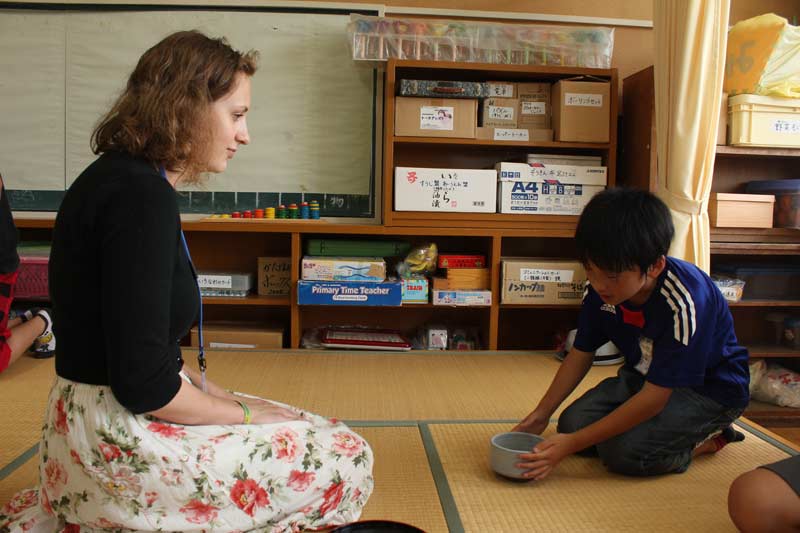
Today was the last activity day of the first session, and we spent it at Miike elementary school in Omuta. After introducing ourselves to the students during the morning assembly, we were assigned to spend the day with one class. I joined a 6th grade class together with Rod from Canada. At first the students were shy, but they quickly warmed up to us when they were allowed to ask us questions about anything (surprisingly many requested an imitation of Japanese comedians) followed by Rod’s Canada trivia. Afterwards we had music, during which we played Taiko – various kinds of Japanese drums. The loud drumming made it impossible for the students to tell us what and how to play. However, the children surrounded us and they taught us the rhythms by action rather than words. Also, they rotated helping us, and we got to interact with all the students in the class. Afterwards we had social studies. As the 6th graders were currently learning about the Muromachi era, the teacher had decided to get into the feeling of that time through Sado – the art of Tea ceremony.


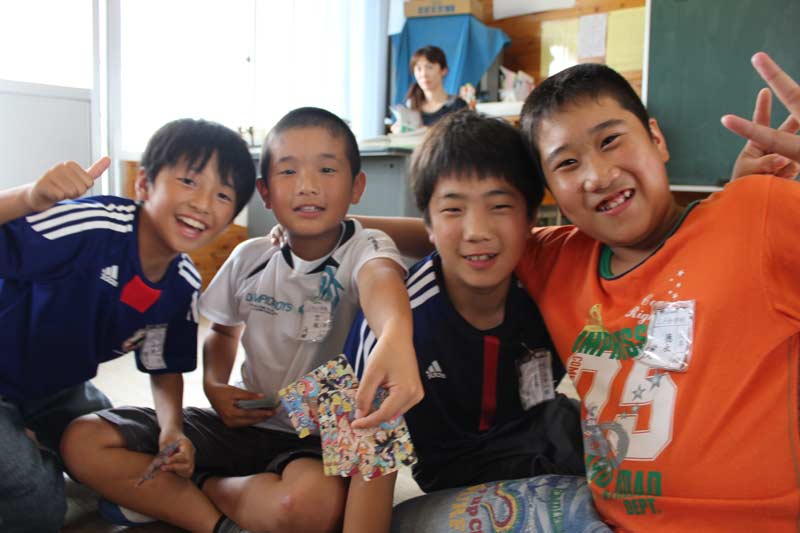
After eating lunch together, it was cleaning time. Because they finished the cleaning early, a group of boys asked if we wanted to play cards with them. Despite the fact that neither Rod nor I knew the rules, the kids, Rod and I had a lot of fun playing cards. And though we didn’t always understand each other, we all smiled and laughed together.


The last lesson of the day was calligraphy. I was surprised by the suddenly serene atmosphere as we all sat quietly and drew Japanese signs on silky paper. In the end I was truly amazed by the contrasts I had witnessed that day: The shy class that welcomed us during the morning, the children vigorously hammering on the drums and the concentration and respect they displayed while practicing the old Japanese arts of Sado and of calligraphy.

(Torunn Olsen, Norway)

Ariake Shinsei High School

Date of activity: June 18th

Waking up in the morning I was wondering if going to a Japanese High School would be fun. Thinking back about my own days in high school I expected the students to either be too shy to speak to us or to not be interested in a group of foreigners like ourselves at all. I have stayed with some host families in Japan that included high schoolers and most of them tend to be shy or uninterested.

Arriving at the school we were welcomed by a tight looking welcoming committee. We were led to a room in which we were briefed about what classes we would join that day etc. Me and some other fellow WCI participants were led to the calligraphy classroom. This is where the madness begun. Upon entering the room, each of us was greeted by hysterical screams of teenage girls, as if they were proposed to by Justin Bieber. Given the fact that 80% of the students at ariake shinsei are girls, this day was bound to get more crazy. When the screaming went over into giggling, we sat down and got to try out Japanese calligraphy. We were asked to write/paint the kanji for flower (花), 3 strokes with the brush and a spoken sentence in Japanese was enough to get the girls praising and screaming again. Doing calligraphy was much fun and we were taught several ways to write/paint it. For example trying to let your writing/painting style be influenced by keeping a certain type of flower in mind.

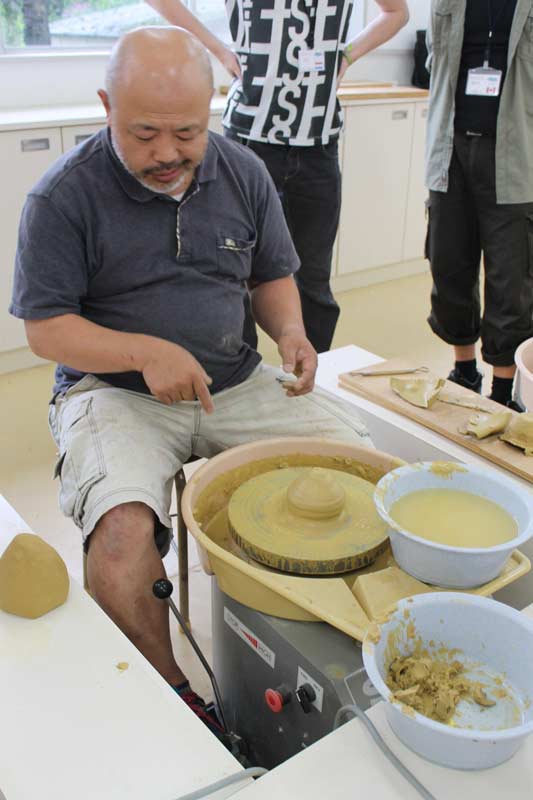
Next up was handicraft class, after introducing ourselves and going through the same screaming ritual as before, we were invited to make silly sculptures out of clay on a potter’s wheel.

Ariake blog post


We all gave it a try, had a laugh and soon the class was over. On the way to the next class, one of the Dutch participants, Robin, was attacked by a group of girls who wanted to take pictures with him. After he fought his way back to freedom, we went on to our next class, which in my case was Japanese History. The teacher spoke some English and really did his best to tell us about the history of the famous coal mines of Omuta. We were then divided into groups and asked to talk about our culture with the students. My group ended up having a conversation about hobbies, foods, history, etc. which was good practice for my Japanese and their English. In short, an educative and fun hour.

After a fulfilling lunch with lots of interaction with the students all WCI participants gathered in a room where we started a discussion with some of the school’s teachers. We got to ask them questions about the school and they got to ask questions about the school systems in our different countries. This is where we were told that Ariake Shinsei gives students the opportunity to strive for whatever goal they have in life, as they are able to choose between 110 different subjects to study. I was really amazed by this and I think a concept like this would work quite well for some students in the Netherlands as well.

At the end of the day we were invited to visit the teppanbu, which is basically a baking club that makes Japanese pancakes. The pancakes they made were unique to Omuta though. I was rather surprised to see how they put layer after layer after layer of weird topping combinations on the pancakes, these included bacon, seaweed, mayonnaise, shaved fish flakes and more. It didn’t exactly seem tasty to me, but it was pretty good after all.

Ariake blog post


On this day a lot of my expectations and thoughts were proven wrong, which I consider a good thing since it means I learned something. This was a very educational, crazy and fun day that left quite an impression on me, I’m already hoping to come back to Japan next year and experience this day again!

Daniel van Delft – The Netherlands