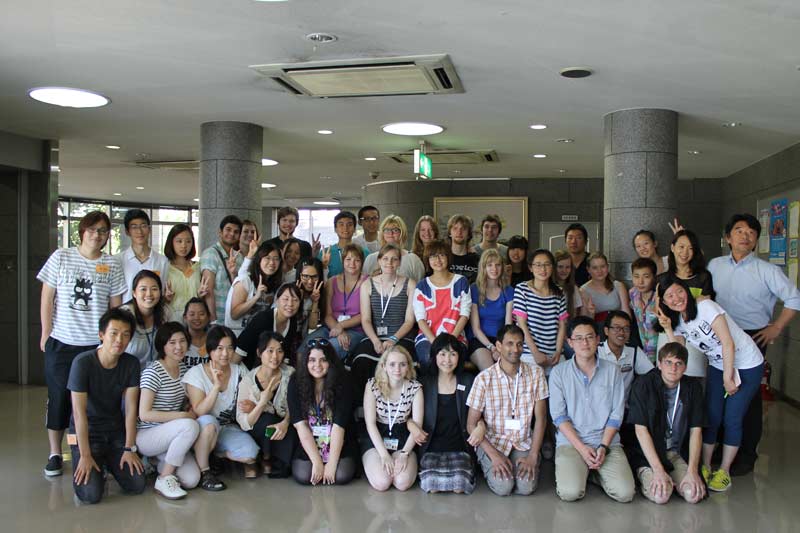
2013 Host Family Day Masuda


Today was our host family day in Masuda city. After a luxury breakfast, Nina and I went painting with our host-mother. She taught us how to paint traditional Japanese style flowers on a piece of bamboo. The result looked pretty good, and it was quite easy to do as well. Next, our host-father took us to his own vegetable garden and rice field, which were next to the house. He told us a lot about the different vegetables he was growing in the garden as he picked them. The vegetables that he grows in his garden are used in the dishes they cook, which is really amazing.

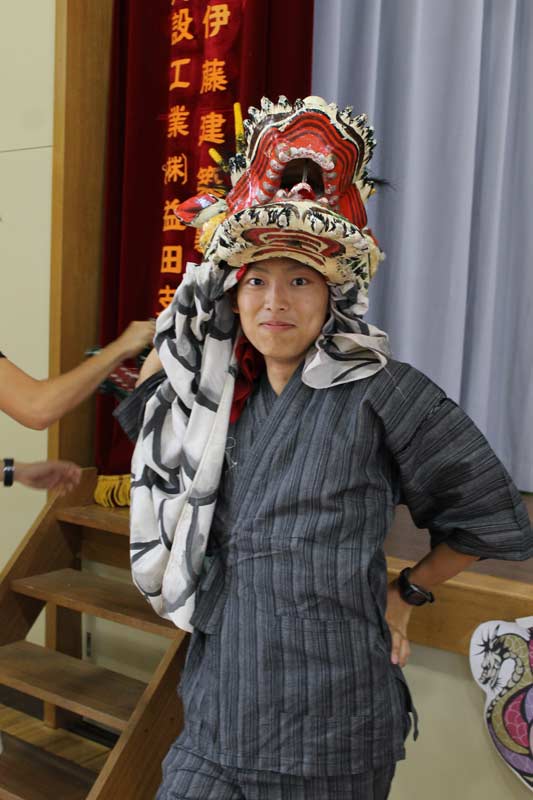
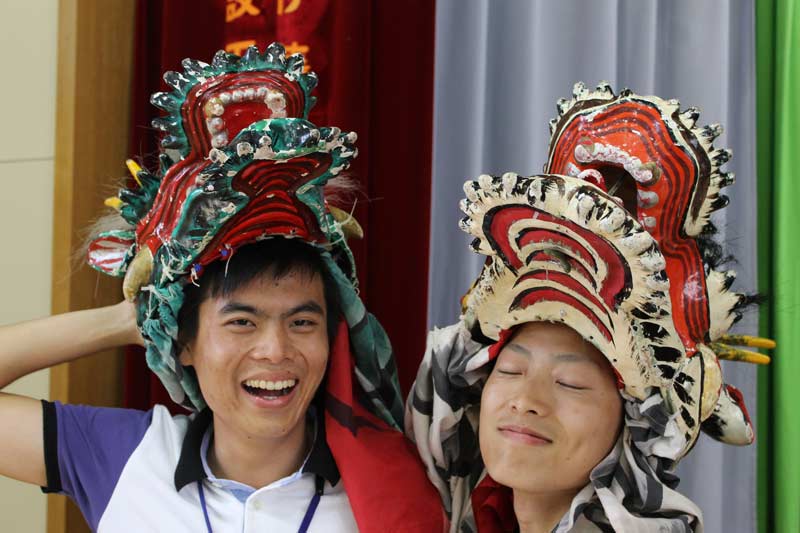
After this tour of the garden we went by car to a school, where we would see kagura (a type of Japanese play) performed by children. All the other participants and host-families were here as well. The first play was about a family whose 7 daughters had been eaten by the 8-headed dragon Orochi. They were getting desperate since their 8th daughter would be the next victim, and so they prayed to the gods. Their prayers were answered and they made really strong sake to get Orochi drunk. After an epic battle Orochi was finally defeated, and the family lived happily ever after. During the break after the first play we got to experience ourselves how it is to wear the Orochi costume, play one of the drums or wear one of the kagura costumes, which was really interesting.

The second play was about Ebisu, the god of luck, who was going to catch a Red Snapper for us to bring good luck. Of course he did not catch it immediately, and since he threw around candy every time before he would give it another try, we got a lot of candy. After a couple of times he did manage to catch the fish though, and to celebrate it even more candy was thrown around.

After the kagura we went to an onsen, where we spent about half an hour in the hot water before we went to an udon restaurant. This was definitely a great ending for a great day.

Lieke Vermeulen (The Netherlands)

Kagura


石見神楽

たくさんの話しがある中の一つで
ある村の家族の娘が毎回大蛇にさらわれていて、困った村の人が神様に助けを求め、退治をするというもの
先日の神楽の内容は非常に興味深いもので、日本人の自分でも長時間鑑賞しても飽きずに楽しめるものでした。
益田に生まれ、幼いころから神楽に触れている人たちは自分達のお祭りにすごく誇りを持っていらっしゃることもわかりまし
た。
ホストの増野さんのお宅では息子さんが踊ってるビデオがあったのも印象にのこりました。
長崎県にも長崎くんちというお祭りがありますが、今回神楽をみてどういう祭りなのか説明できるほど詳しくないのに気づかさ
れました。
来年、長崎大学に留学してくるメンバーに説明できるようになっていると役立ちそうだとおもいました。
World Campusのメンバーの反応をみても、お祭りには関心を持っているように見えたので、もっと日本の祭りについて知ってお
おくと役に立つだろうと思った。

Kumamoto Prefectural University and Kumamoto YMCA

Kumamoto Prefectural University and Kumamoto YMCA


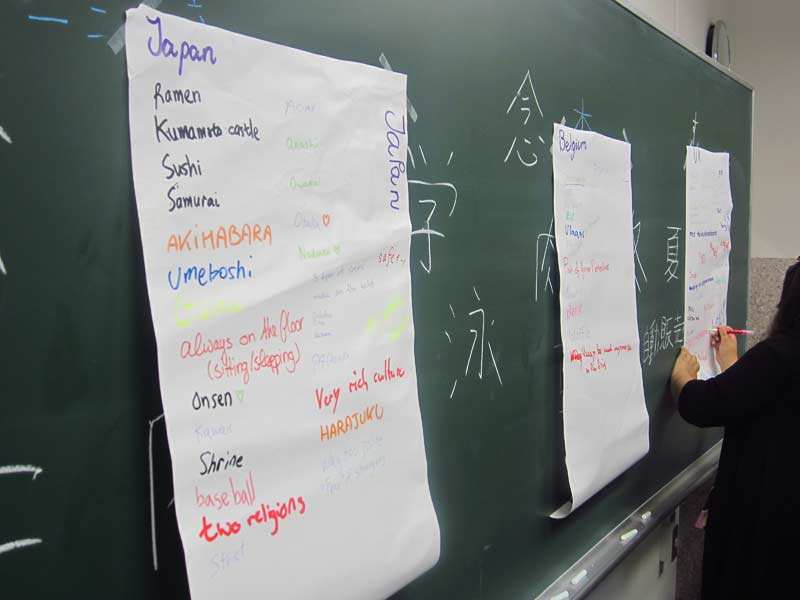
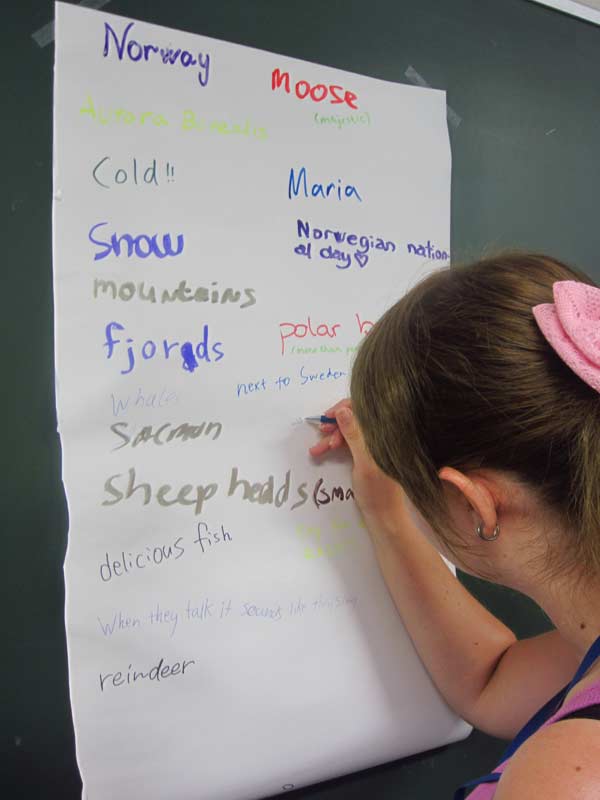
Today we visited Kumamoto Prefectural University and Kumamoto YMCA. The university students all study English and introduced themselves to us in English, much to my surprise. We responded by introducing ourselves in Japanese. We then decided to play a ‘stereotype game’, in which the students all wrote down their impressions of all 9 countries represented by World Campus (and one by a British teacher). Students (and teachers) then got a chance to comment and correct these statements. It was a nice icebreaker and a truly amazing way to learn about each other’s countries, as well as seeing what other know about your country.

Kumamoto Prefectural University and Kumamoto YMCA


We then moved to Kumamoto YMCA, where various foreigners study Japanese. We spent over 1,5 hours talking to each other in small groups, learning about everything from their country to their dreams for the future. It was a rather pleasant experience, seeing as we now got a chance to have some serious conversations with people our age in a similar situation as ourselves, despite the fact that some languages barriers were still present.

Kumamoto Prefectural University and Kumamoto YMCA


This was followed by a short trivia game about our countries as well as the YMCA student’s countries. The questions were hard, but interesting, and taught us a lot.

Oda (Norway)

Host family day in Kumamoto City


On the second host family day of the second session, Oda (from Norway), the Hamada family and I went to visit the Kumamoto castle. It was so beautiful! Apparently they had just renovated certain areas, which attracted many tourists. The view from the top floor was incredible; it was really interesting to see how one side of Kumamoto was a concrete jungle, and the opposite side was entirely covered in trees. We had a lot of fun taking pictures and exploring the castle.

After a 30-minute drive we arrived at the Aeon shopping mall, and it was huge! We didn’t have the time to see everything, but after a nice bowl of ramen and a few cute shops we went home to take a rest. It was really hot outside, so by the afternoon everyone was a bit exhausted.


Later in the evening, after dinner, a friend of the family came by with a surprise; she used to be a Yukata-teacher, an thus she wanted to teach Oda and me how to wear Yukata. We chose our Yukata and helped each other in putting them on correctly. Once we were all dressed up our host family told us we could keep the Yukata as a gift; so generous!

We then went to eat some midnight icecream, which was a bit hard dressed in a Yukata, since it’s quite tight and heavy. But it was really nice, and altogether this day was a lot of fun.


I really love host family days because you get to know each other better. You finally get to know the people you’re staying with, and they get to know their guest. Especially when you go shopping you learn what everyone likes or dislikes. We had a great time with the Hamada family, and hopefully we’ll see each other next year!

Deyanira Velasquez-de Beer (The Netherlands)

Jikei Hospital in Kumamoto

Jikei Hospital in Kumamoto


Today, we went to Jikei Hospital in Kumamoto. This hospital is unique because of the so-called Stork’s Cradle, where people can give their baby away anonymously. Before the visit, we did some preparation at a nearby YMCA, which consisted of basic information about the hospital and the Stork’s Cradle, and we had several debates about topics like abortion, nationality, and anonymity. Because these topics are so delicate and hard to answer ethically, there were many different opinions. We also learned a lot about our countries though these conversations. Generally there are a lot of opportunities if adopting in the participating countries, but not many of them have something similar to the Stork’s Cradle.

Jikei Hospital in Kumamoto


When we got to the hospital, we first got to look at the Cradle itself, where people can physically give up their baby. You can either ring the bell for assistance from the staff, and then decide whether you still want to give your baby away, or you can just put the baby in the special baby hatch. Even though you can do it without talking to the staff, there is a letter in the hatch addressed to the parents. This explains that they can get their baby back if they get regrets in the future.

These and many other topics were talked about in a PowerPoint presentation by the founder of the baby hatch, Dr. Hasuda. He also explained why the organization was founded; to stop the killing of unwanted babies in Japan. In spite of the internal debate in the Japanese government, the permit was granted to Dr. Hasuda in 2007. During the rest of the meeting we could ask Dr. Hasuda questions.
The day was very educational and contributed something very special to the program, I believe.

Amalie Nielsen (Denmark)

Unique Access to Japan!

close

Enjoy this blog? Please spread the word :)

  • Facebook
  • Instagram
  • YouTube
  • Twitter
  • RSS
  • Follow by Email