Interaction with the local university students

Interaction with the local university students

Day of activity: june 19th, 2015

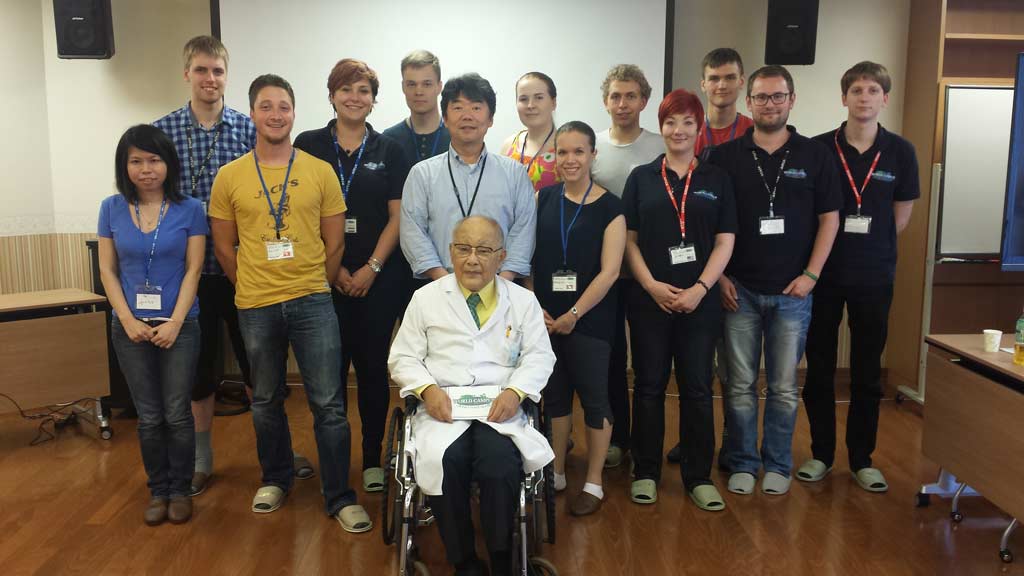
Today we mixed ourselves with the students of Kumamoto Prefectural University. As most of them were English majors there were fewer struggles communicating than most World Campus Japan participants had on the average day in Japan.

When we arrived in the morning the students first welcomed us warmheartedly and then introduced themselves shortly. Hereafter also we foreigners introduced ourselves in short. The Japanese students then invited us to the front for a round of speed dating. All of us got about 30 seconds to a minute each to get to know the person opposing ourselves, after which we switched to another person.

The morning activities they had planned for us consisted of discussions about various topics. All of us being from different countries made the discussions a lot more interesting and everyone’s opinions varied greatly, making it into a wonderful learning environment about each other and each other’s culture.

In the afternoon we first ate lunch with all of us and then we had a surprise visit to the University of the one and only Kumamon, who performed some dances in the main cafeteria. Some of us had never seen Kumamon before and were either staring at his dances with admiration or with dullness. After one of us managed to sneakily hug Kumamon and take a picture, we all headed for the gym to fight out a dodgeball match! Because we were all pretty big fellows who played this game very seriously it was more like a dodgeball war. Especially when the teacher decided we should play with 3 balls at the same time… it became true ‘dodge’ ball! As a final match and as last event of the day we played World Campus vs. Kumamoto prefectural university and just guess who won!

Jurrien Theunisz (The Netherlands)

Hospital day

Jikei-hospital-grp-photo

Day of the activity: June 18th, 2015

Today we went to the Jikei hospital where they have a so-called ‘baby hatch’, or more formally ‘the stork’s cradle’. It is a place where parents who are unable to care for their children can drop off the baby anonymously.

Before we went to the hospital itself, we had s meeting with a nurse whom had worked with the cradle for several years. She told us many emotional stories about women who couldn’t even tell their parents that they were pregnant, and had come to the stork’s cradle. I was quite surprised that the social stigma around pregnancy under the ‘wrong’ circumstances was still so powerful, and even more shocked and surprised when we were told that before the cradle was started, there had even been a problem with babies being abandoned and found dead.

When we came to the hospital, we were overwhelmed by all the cameras and journalists who were there for reporting on our visit. Apparently all the local TV stations, and at least one national newspaper, were there to cover our visit. We went to have a quick look at the hatch itself, and then we went inside to talk with one of the founders of the cradle.

It was very interesting to hear what he had to say about the effect that the cradle has had, but all the cameras made it somewhat uncomfortable. Afterwards, some of us went to take a closer look at the hatch, and even got to look inside. Inside was a letter with information for the child’s parents, and I was relieved to see that it is impossible to leave a baby without taking the letter.

Johannes Meyer (Norway)

Visit of a special education school in Omura

We visited a special education school in Omura and it was a really interesting visit. The kids were super excited to see us, and they had prepared a lot. First we talked to a teacher, who told us about the history of the school, how it is run, and the curriculum. It was really nice to learn about, to see the differences and similarities between Norway and Japan when it comes to special education schools.

Afterwards we talked to the teacher, and then we played ‘Alele’ with the students, which was really fun because the students were all super excited about it.

After that we were all divided into 3 groups, and my group left with the 2nd graders to go to another room. In this room all the students introduced themselves in English, and I was surprised at how good they all were, because most Japanese people I’ve met aren’t that good with English.

We then played a couple of games with the students, and after that, it was time to leave.

Line Haavik (Norway)

Unique Access to Japan!

close

Enjoy this blog? Please spread the word :)

  • Facebook
  • Instagram
  • YouTube
  • Twitter
  • RSS
  • Follow by Email