A couple a days ago we traveled from Omura to Kumamoto and we made a little introduction of our self in the bus.

A couple a days ago we traveled from Omura to Kumamoto and we made a little introduction of our self in the bus.
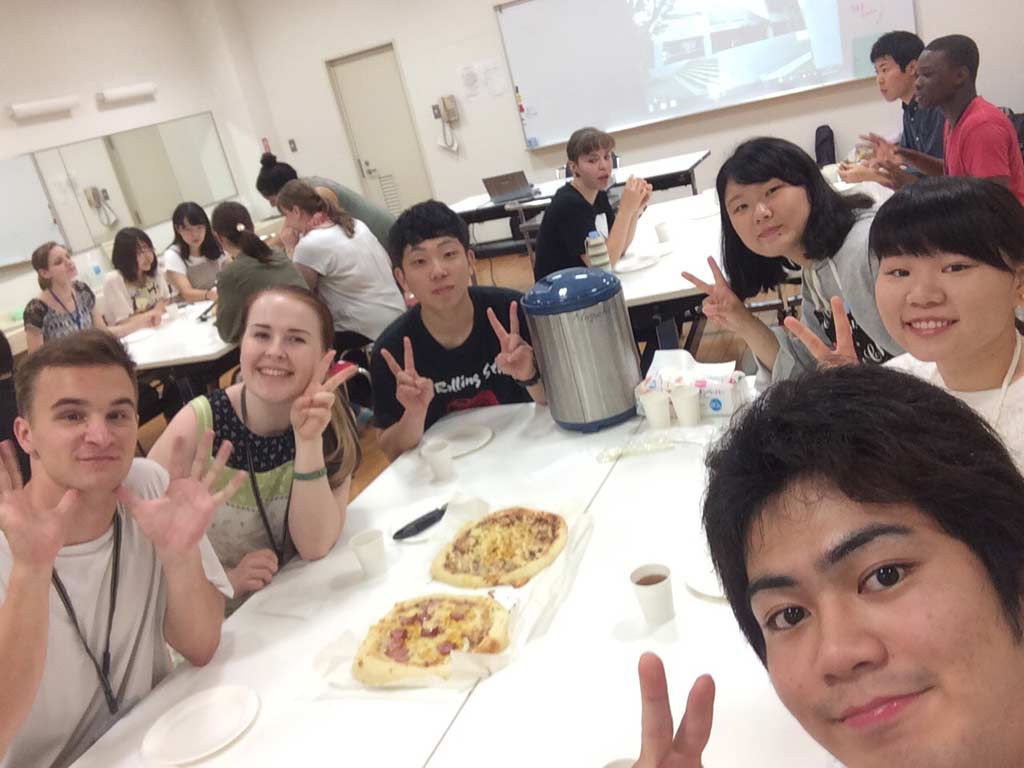
Pizza. Pizza can be a wonderful food. First invented in Naples, Italy at the dawn of the 19th century, pizza has been considered a traditionally western food since its inception. Eaten gratuitously in the United States, pizza has thrived as an American delicacy, evolving into many different styles with more toppings than there are stars in the sky(citation needed).
Given that description, giving pizza to an American in a foreign country is sort of like giving a Japanese person sushi or (even more heinous) giving a Dane a Danish; you don’t expect it to be anything new or exciting. However, against seemingly insurmountable odds, the afternoon I spent at University of Kumamoto shoving yeast and flour in a bottle and preparing the very food I knew the best felt more foreign to me than anything else.
Now, dear reader, as you may be thinking, “what is this impossibly handsome author talking about? He just said that pizza was the most American thing he could think of!” First off, thank you for the compliment, secondly it wasn’t just the pizza that made the day great silly, it was the people making it!
I don’t believe that there is anything that brings unfamiliar or even estranged people together more effectively than activities. That’s why even that skinny guy who wore eyeliner and tight pants in high school got up when an impromptu game of dodgeball was announced by the neighborhood kids, the fun of doing something with others is an addiction impossible to escape.
Within the blink of an eye, the Japanese of Kumamoto and the World Campus members of American and northern Europe were no longer from anywhere but planet Earth. We were singing and playing music and eating delicious food, bound together by nothing more than a mutual love for all of the above. So, when I look back on my day cooking pizza with my newfound friends of Kumamoto, it won’t be the pizza I’m remembering, but who I was eating it with.
Cam out.
Cameron Henry, USA

On Friday we visited Minamata Eco town and learned about the Minamata disease. Since Minamata is approximately 90 km from our home stay city, Kumamoto, it was a day full of travelling and beautiful countryside viewed from the bus windows. We also had a guest student in our group, as my host sister joined us for the visit.
Our first stop at the Minamata Eco Town was enlightening in many ways. In Japan, like in Finland, people are very careful about recycling, but even though I recycle myself, I have never given much thought to how the lifecycles of the recycled things continue. At Minamata we learned about recycling and saw how glass bottles are recycled and reused in Japan, and I have to say that there were many glass bottles! All the workers seemed very passionate about their job, which I have to give them credit for, especially since some of the job includes checking an endless line of reusable glass bottles for cracks. Later we could also buy different glass products made out of used glass bottles by the manager, Mr. Tanaka. We also learned that it takes about 20 wine bottles to make a square meter of asphalt, which is an ingenious way of reusing glass!
The second activity for the day was Minamata Disease Municipal Museum. Even after a small briefing we had already had about Minamata disease, there was still lots of new information at the museum. We also had the opportunity to listen to the story of a Minamata disease survivor, Mr. Nagamoto. He was born with the disease, and his story was very touching. Firsthand experience and the feelings he could describe made the whole thing feel much more real: after all, although the pollution of Minamata took place in the 60’s it was not until 2004 that the prefecture was sentenced responsible for the disease. Although Mr. Nagamoto has suffered from the disease his whole life and will continue to do so as long as he lives, he talked about the things matter-of-factly without bitterness and smiled often, which is, I think, something admirable. The disease itself and the suffering it caused for Minamata citizens, whether they were victims or not, was a rather difficult subject, but the beautiful view from the museums roof and the positive attitude of the survivor helped to lighten the mood a bit.
All in all, the day’s activities were very informative and interesting. Protecting nature and recycling seems now even more important to me than before. It is terrifying what we can do to the environment because of ignorance or indifference, and the extent of catastrophes such as Minamata is unbelievably large. I hope that the highly ecological ways of Minamata will spread so that we can prevent things like this from happening again.
Heidi Ropo, Finland
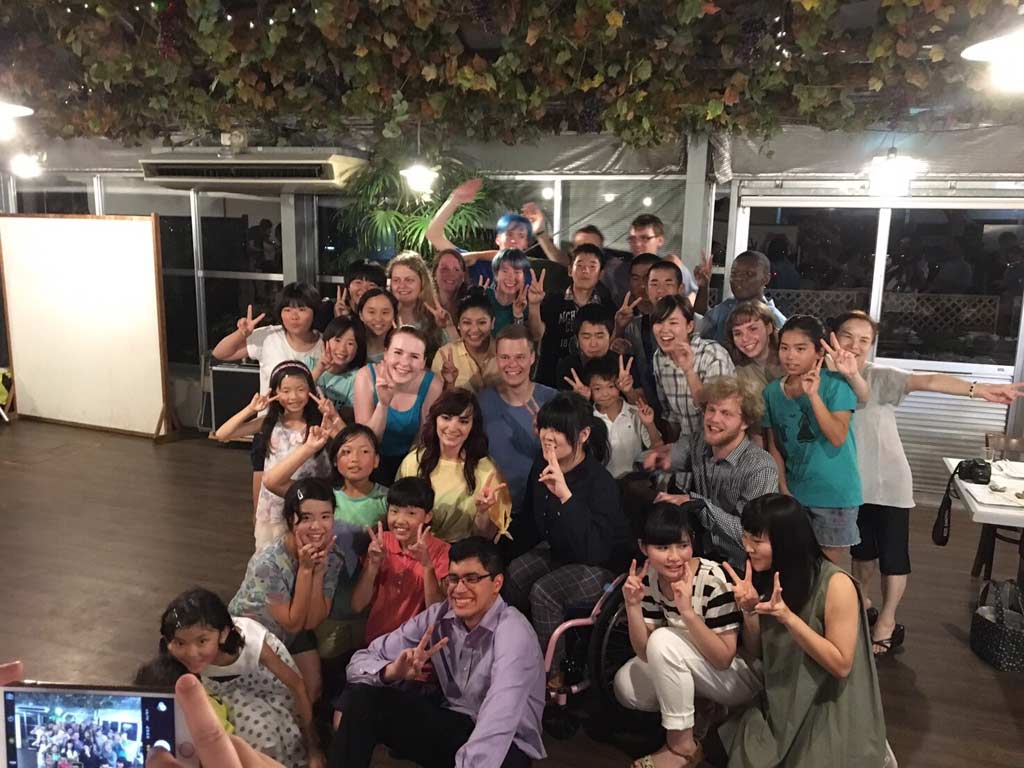
The day started out by all of us rehearsing for the Arigatoo Event at the Kori Community Center. The time went by so fast with people goofing around and enjoying each other’s company. Some of us even went to the nearby shopping center and had pictures taken in a Japanese photo sticker booth, or “purikura”. It was so much fun, even though we were in a hurry to get back to rehearsing.
Around 4 o’clock we moved to the location of the Arigatoo Event, Shu-Shu. It has a really pretty view over Omura, and you can see really far in clear weather. It was really nice to see how the landscape and mountains change with the time of the day.
Finally it was time for the event! Even though I was really nervous, I also knew that I was amongst friends and that it really did not matter if I may not be the best singer or dancer. They will cheer for me anyways. I am really amazed by how energetic and helpful people are! Everyone was really helpful and the night enjoyable. I will never forget this.
At the Arigatoo Event we had a lot of important speeches from the LOC and the representative of the mayor’s office for example. But what surprised me the most was that the venue, Shu-Shu, normally wouldn’t be open on that time, but due to the influence of the LOC’s we got to have this party in such a nice place. I am very grateful for this!
After speeches we had dinner with our host families followed by our dancing performances, picture slideshow of our time with our host families in Omura, thank you cards being read and ending with our singing performance. The last song I was really nervous about because I had a solo representing my country. But feeling the energy from the audience and my friend made me relax and I was able to have fun. It is not about having a nice voice, but the fact that you do it to create joy.
Then the local orchestra played and we all got to dance! It was SO much fun! I really missed dancing and being able to dance with both host families and friends was really nice. Everyone was happy, energetic and especially the boys drew attention with their group dancing. Everyone really gave it their all during this event. And I am really grateful to have been able to say “thank you” to the host families, LOC’s and everyone else involved in this trip in such an enjoyable event.
It is sad to think about this being our last day in Omura, but at least we were able to say our thanks and make people enjoy themselves, creating laughter and smiles. I am pretty sure not a single one of us will forget this day – ever!
Arigatou Gozaimasu!
Anna-Louise Lydom, Denmark
Zevon talks about our visit to a Japanese Mountain school in Omura. We joined the children for a day in their life so that we could share there experience and learn about the japanese school system.


