Nagasaki Atomic Bomb Memorial Museum

Today we were granted the wonderful opportunity to visit the Nagasaki Memorial Museum. It was a bit rainy at first, but luckily that counteracted the immense heat from the previous days.

Everyone from WCI managed to fold at least 70 origami-cranes, I know I couldn’t have done so without the awesome help from my family. My host father folds really fast and even my 2 little sisters and my little brother helped folding the cranes, which made it a fun family activity.
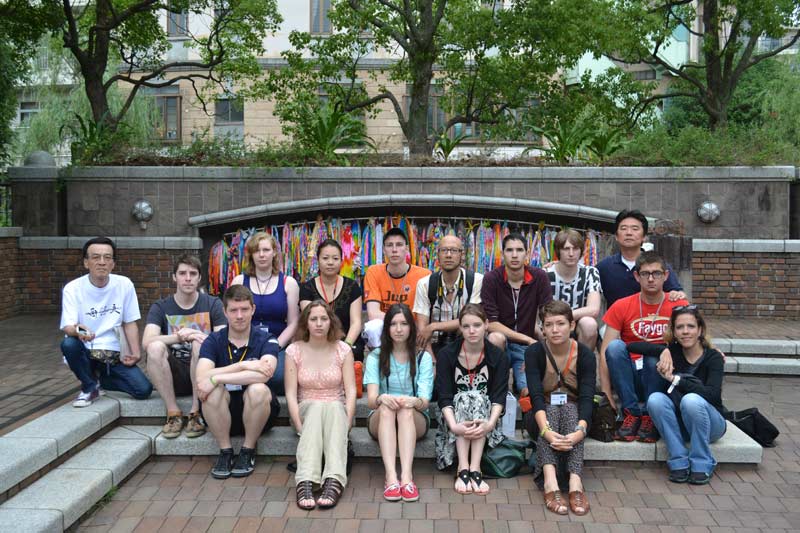
Nagasaki Atomic Bomb Memorial Museum cranes


The Museum itself is an amazing building from the outside and the inside is impressive to say the least. Though I had learned about the dropping of the bombs in school many years ago, I felt like I knew nothing, walking past the various displays and exhibits. The immense horrors that the people of Nagasaki and Hiroshima had to go through were carefully displayed, along with some amazing stories of survivors and noteworthy people from that era.

Our guest speaker, Mr. Yamawaki-san, 78 years old, told us his story about when the bomb dropped 2 kilometers from his house in Nagasaki. His story was moving, touching and devastating. For instance the tale about his father who was working in a factory near the hypocenter of the bomb. I admire his perseverance and his will to honor his late father properly, together with his brothers (Yamawaki-san was 11 years old at the time).

Nagasaki Atomic Bomb Memorial Museum yamaguchi


I also admire his ability to carry on with his life and to be able to speak to so many people about the moments after the bomb dropped. Even more the fact that he is able to tell his tale to foreigners like us who essentially have no idea what the people had to go through.

(I myself only knew the facts, I had never really thought of the survivors and what they had and still have to go through. Like Yamawaki-san who now still shows signs of radiation poisoning)

After we had visited the museum and shared our feelings and visions with the WCI group, we visited the Nagasaki Peace Park (Heiwa Kouen), where I was immediately impressed by the giant statue pointing up and yonder. Unfortunately it was still raining and after we took a group photo we went back on the bus to hit the art museum in Nagasaki.

Yamawaki-san left a giant impression on me, being able to pick up his life and share his story with anyone willing to pay attention. The following question asked by a WCI-participant impressed me a lot and made us all think about our role in all of this:

“What can we do as younger generation to avoid facing these horrible events in the future?”

Yamawaki-san replied:

“Share your knowledge, what you have learned today and what you find important in life, share this knowledge with everyone to make sure everyone understands what happened and to make sure that this will never happen again.”

Robin de Rijke – The Netherlands

Shorinji Kempo

I had no idea about what to expect about this day and I love it. Expectations aren’t cool…they sometimes don’t let life surprise you!

We started the day reviewing some Japanese lyrics and sign language, and after that, we moved into another room to hear some history and also watch a video about it.

Shorinji Kempo definitely isn’t your average martial art.

For starters, you take your partner as an equal, and you salute your Sensei as an equal. Looking at the other person right in the eye, there’s no traditional Japanese bowing here.

Also, the philosophy of it is very interesting. They talk a lot about balance, specially when it comes to Power and Love. They say, if you have Power only, your actions may become dark. And if you only have Love, you might become weak in your relationship with others.

I think this is quite true, because you definitely need to work on your strength to be able to actually do things that help others.

Shorinji Kempo works on every aspect of the human, from body to spirit. It’s not only some class kids take in the afternoons. It can become a way of life, or at least, that was the creator’s intention.

shorinji kenpo zen


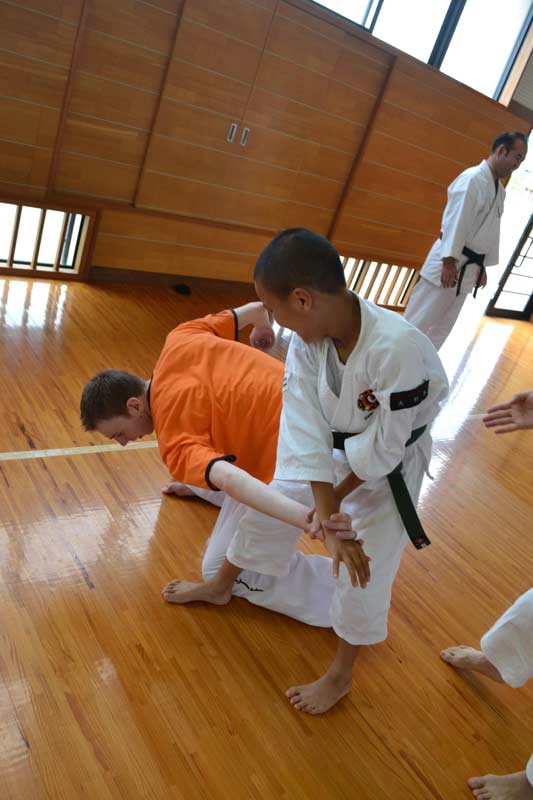
The practical aspect of learning Shorinji Kempo was fun. Only, for me, a little rough. I guess learning moves being the ‘attacker’ against one of the adult Senseis can’t really end painlessly.

That’s what I call physical Japanese cultural learning. That’s culture you can feel in your left arm.

shorinji kenpo physical experience


But, yeah, maybe I am exaggerating.

It was awesome to see the little kids doing Shorinji Kempo, and also watching a father-son choreographed fight. In the end, we had an interesting question and answer session.

I appreciate so much these people that let us walk in into their daily activities and actually be part of them, not only be there as spectators. Little by little you start understanding and loving even more this culture we came here to meet.

Paulina Meza, México

The ‘Decopon Face’

My host dad, who is an elementary schoolteacher, taught me the name of a Japanese citric the second day I arrived to the country. We have been gradually converting that word into a growing inside joke. I’ll tell you why.

The word is ‘decopon’, and that first time I pronounced it nasally exaggerating the last syllable a lot…That night, my host parents and me laughed about it and repeated the word quite a few times. More loudly each time.

The next day, my host dad told me (in his nice but broken English) he had told his class about me and about my ‘decopon’ pronunciation. His whole third-grade class found it hilarious…So did I. Embarrassing but in a really funny way.

The Decopon Face decopon


Then, at night when we went to buy dinner groceries, I could tell he was telling the salesman about the story, because of the way he was talking and looking at me and also because he ended the story with a loud ‘DECOPOOOON’. He then wanted me to say it. I just laughed and got red, but didn’t repeat the word.

Today was our Host Family Day and we went to a river, then to downtown Nagasaki. We had an incredible time! We had lunch at a restaurant, hung out at an awesome four-floor stationery store, went to a Shinto shrine, and also went to the ‘Spectacles Bridge’ and took a lot of pictures.

To finish our Nagasaki day, we went to the Historical Museum, and looked at the exhibition.

The last part of the exhibition was about Elephants, sponsored by a local chain of grocery stores that features an Elephant in its logo.

You can definitely appreciate that Elephants were an important animal in Japanese society before, and you can enjoy the changes in art in the different sculptures and paintings, featuring, of course, elephants.

There were a few paintings and miniature sculptures that had really funny faces and expressions painted on them. I pointed at one, and said: ‘Decopon face!’

We started laughing very loudly inside the entirely quiet room, and had to cover our mouths and look to different ways to be able to stop.

Good thing we were almost finished with the exhibition because the rest of it, practically all we could see, were decopon faces…

It is so amazing how no matter how different our mother tongues are, and how different our backgrounds are, we somehow have a very similar sense of humor, similar feelings and ways to connect…

We have been having such a perfect time, sharing random things and laughing about random situations…I have even learned about Japanese onomatopoeia with them!

I am super grateful for all we have shared in these few days, no matter how much guessing there has been in between! I am lucky to be in this family this week.

I will definitely say goodbye to them with an enormous hug, a happy heart, and my funniest decopon face.

Paulina Meza, México

School and rice-planting!!

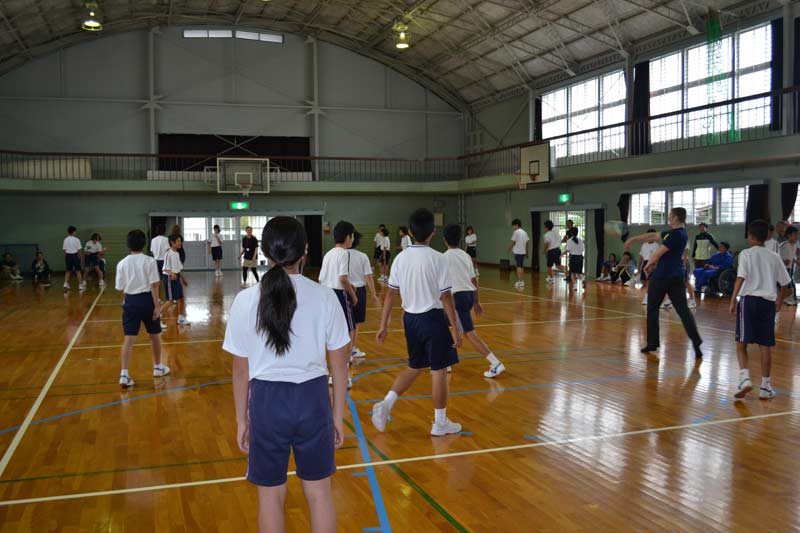
The first session we visited Kaiaze junior high school. All of the World Campus Participants/Staff split up and joined different teams to play dodge ball with the kids. These were not only kids from Kaiaze junior high school, but also from a Japanese school for deaf children. It was so much fun!

When we first joined our teams I found my way over to a small group of girls and talked to them a bit. I made a friend, Maho, and she was just so sweet. She would introduce me to her other friends and they’d all talk to me a little in Japanese, but since my Japanese isn’t all that great, I couldn’t talk to them too easily. When our first game actually started, I was usually with Maho, and her friends would come and go too. They found the World Campus guys on the opposite team scary and would always comment to me when one of the guys got the ball “Ah, hayai!” (he’s so fast!), “kowaii!” (scary!), or “tsuyoi!” (strong!). Maho’s best friend would just run behind us and duck down behind us – I felt so included.

taue day dodgeball


Later in the day we got to plant rice in a paddy near the school. We all wore high socks that our host family had given us, and walked right into the paddy! There was such deep mud that you’d make a sucking noise when you pulled your foot out to take another step. All of the kids were laughing at the noises. When we lined up to plant our seedlings, I found Maho and her friends! We got to be together the whole time, and she helped me figure out how many to plant at a time and how to stir the mud so that it would be a good place to plant them.

taue day rice planting


I was so happy that I had been able to be with her again. It was really fun, and I’m really happy that I got the opportunity to plant rice seedlings while interacting with the kids as if really being part of Japanese society.

Kristen LaMier – Amerika

Meeting the Mayor

Today was our first activity day! We spent the morning meeting with the Mayor of Omura, followed by an intense dodgeball game with junior high students. For lunch we ate traditional Omura Sushi and Japanese Somen. In the afternoon we were getting muddy planting rice with junior high students and finally wrapped the day up by spending time with very young children at a pre-school. Whew! It seems like everyone is very tired but had an amazing day.

In more detail, our morning with Takashi Matsumoto (Mayor of Omura) was spent at the City Hall. In contrast to our sweaty dance gear from the day before, staff and participants dressed ‘to the nines’ with semi-formal attire-suits for the men and business wear for the ladies. Formally greeted with bows by his staff, we filed in to the Mayor’s conference room for the morning meeting.

Takashi Matsumoto has been in office since April of 1987. Because of his 25 years of experience, he has great insight into what being a Mayor is like and how Omura has progressed through the years. Standing up as a sign of respect, Matsumoto entered the room and introduced himself. The Mayor briefly described his position in office and each World Campus Japan participant gave a brief self-introduction. Matsumoto expressed his love for Omura. He commented on the city’s natural beauty and his hopes for the future. He also discussed his passion for leading and creating continuous improvement. Quite inspiring! We then were allowed to ask questions about Matsumoto, Omura, Japan or life in general. It was wonderful for him to take time to meet with us and I am pretty sure he appreciated our interest in Omura!

Unique Access to Japan!

close

Enjoy this blog? Please spread the word :)

  • Facebook
  • Instagram
  • YouTube
  • Twitter
  • RSS
  • Follow by Email