We tried to show all the memories that the participants had in Arao and Omuta, through this slideshow.
OneRepublic – Counting Stars©

We tried to show all the memories that the participants had in Arao and Omuta, through this slideshow.
OneRepublic – Counting Stars©
Day of activity: June 25th, 2015
Today we had two very different experiences. First, we went to the mining museum in Omuta to learn about the important role the city played in Japan’s industrialization. We learned that Omuta is blessed with an abundance of high quality coal, and as such it was perfectly suited for providing the fuel Japan needed for its industrialization efforts. The transfer of technology from the West to the East is something that the Japanese are proud to have been a part of, and since we don’t learn much about it in the west, it was quite interesting. The mining sites are a candidate for becoming a UNESCO world heritage site because of the unique role they played in the history of the world.
Our guide in the museum was himself a former coal miner who could tell us more about modern mining techniques in Japan as well, and he was very enthusiastic about teaching us what he knew.
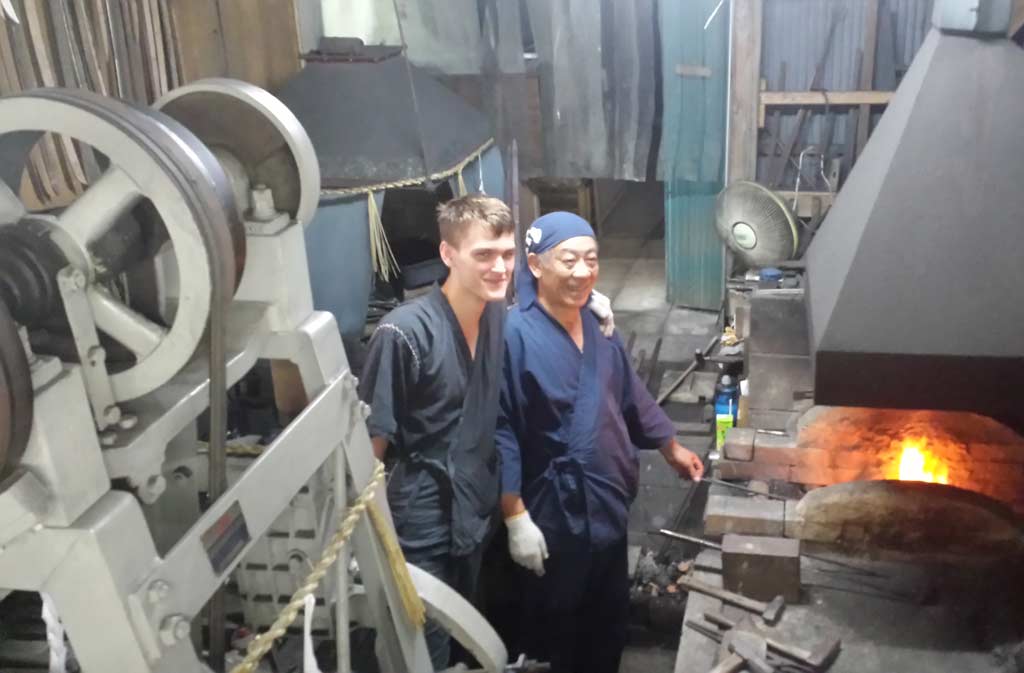
After spending some time at the local mall eating lunch and shopping, we went to meet with a katana swordsmith. With his 37 years of experience (he is currently 62) he was able to teach us much about the difficult art of making a katana sword. The metal folding process is especially important, since Japanese iron is normally made from iron sand which produces a material that is not necessarily well suited to weapon making.
After talking with the swordsmith, we were instructed on how to cut a wet, rolled up, tatami mat in half using a katana. Most of us failed on our first attempt, but I and several others were able to make a clean cut by our second attempt.
Simon Presley (Denmark)
Day of activity: June 23rd
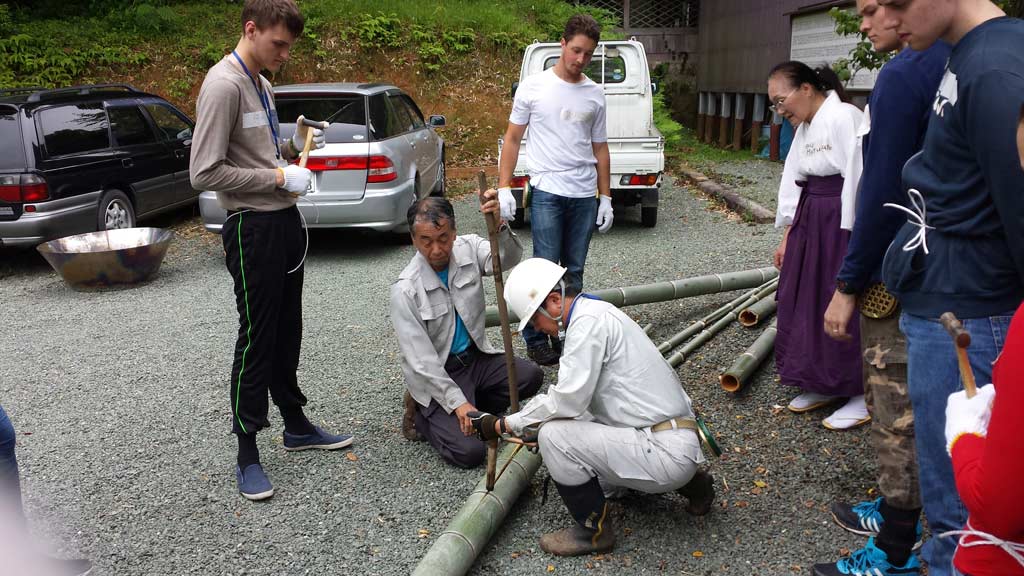
On our second activity day in Omuta/Arao, we went to the Bambooforest to cut bamboo, because it grows really fast here in Japan, and kills the other plants. It was the first time for the WCI doing this.
First we went to a little shrine in the forest, which functioned as our headquarters for the day. After we arrived, we received an exorcism
from the 75 years old priest of the shrine. She wished us good health and that we went without any accidents throughout the day. After that, we split into two groups, one for cutting weeds and bamboo, the other one for the kitchen. They prepared the sllide for the Nagashi Somen noodles and the rest for lunch.
The bamboo-cutting-team made many things from bamboo, like beerglasses or cups, bracelets and plates, and chopsticks.
The kitchen team cut big bamboos in half and prepared them so that they could be used as a slide. Eating Somen out of this silde wasn’t as difficult as we expected. After Lunch, we had a lesson about the Japanese forests and the role of the bamboo in them. We also learned that bamboo is a really supermaterial, because it’s waterproof, antibacterial, and doesn’t break, so you can use it for everything.
It was a really fun day, but also really exhausting.
Phillip Mahn (Switzerland)
On the 23th of June we went in Omuta/Arao to a Bamboo Forrest. Johannes shares his experience with you!
When I stepped out of the car there were a lot of children walking to school, however they all got somewhat distracted when they saw us huge foreigners in the parking lot.
We then all went to the library where we had our morning meeting with a giggling Megan leading the meeting. My first class was music with Juuso, Aileen and Nicole. The class started off with the students singing a song which i believe was the school song but it soon went over to origami. After another similar music lesson with another class we had caligraphy with the 3rd graders. We drew the kanji for earth, and I think that japanese kaligraphy is a lot harder than it looks… We then had swimming class but there was no chloride in the pool so it it tasted a bit funny… After a somewhat stressful lunch for my part due to students being very active even while eating, we went to the sports hall in order to prepare for the arigato event dances we wanted to show the students. The students were overjoyed and sang/danced along to some of the songs better known to the younger generation. We ended the event by dancing the macarena with all the students and playing “Oh! Alele!”.
The day was overall a great success and at the end of the day a student wanted all of our autographs.
Isak Oden (Sweden)


